Best Automotive Cost Reduction Strategies for 2026
There are several measures that the automotive industry can adopt to cut costs. Most of these measures involve incorporating new-age digital technologies. With the fast-paced growth of the automotive industry, there has never been a greater need to adapt digitally.
A manual vehicle inspection costs between $100 and $300 per unit in field inspector fees and administrative overhead. For a fleet operator running 500 vehicles through two inspection cycles a year, that is up to $300,000 in inspection costs before a single repair bill arrives. And that is just one cost centre.
Margin pressure across the automotive sector in 2026 is coming from several directions at once: rising repair costs, increasingly complex vehicles, regulatory demands, and claims fraud. The businesses making real progress on costs are not doing it through broad efficiency drives. They are targeting specific, measurable cost drivers with technology and process changes that have a clear return.
This guide covers 8 automotive cost reduction strategies for 2026, relevant to fleet operators, insurers, and automotive operations leaders. These cost reduction techniques range from AI vehicle inspection automation and predictive maintenance to over-the-air software updates, operational partnerships, and regulatory compliance.
Where Automotive Operational Costs Are Actually Leaking
For fleet operators and insurers, cost leakage comes from a few recurring sources that are worth identifying before discussing solutions.
- Manual vehicle inspections are the most visible. At $100 to $300 per inspection, the cost scales linearly with fleet size. It is also slow: a physical inspection takes most of a working day when you include scheduling, travel, and report processing. The work is inconsistent too. Two inspectors assessing the same vehicle will not always produce the same findings.
- Claims leakage and fraud sit alongside it. Inaccurate damage assessments at the point of inspection create disputes later. Without a consistent, documented inspection record, it is hard to establish when damage occurred or who is liable.
- FNOL delays compound the problem. Over 60% of manually filled FNOL forms contain errors, missing information, or unreadable entries, according to industry data cited by EasySend. Those errors trigger adjuster callbacks, extend the claims cycle, and in some cases result in overpayments or missed fraud.
- Poor data visibility is the underlying problem that makes all of the above worse. Fleet managers and claims teams are often working from incomplete pictures. Without a consistent inspection trail, it is difficult to track incremental damage, identify liability, or build the data models needed to forecast costs.
These are the cost drivers this article addresses. Here are some methods to reduce automotive operational costs in 2026.
#1 - AI-Powered Predictive Maintenance for Cost Reduction
Unplanned downtime is one of the most expensive operational events in automotive. In a major manufacturing plant, a single idle production line costs up to $2.3 million per hour, according to the Siemens True Cost of Downtime 2024 report. For fleet operators, unplanned vehicle breakdowns carry equivalent costs: idle vehicles, missed deliveries, emergency repair premiums, and driver overtime.
Predictive maintenance uses AI and IoT sensors to monitor equipment and vehicle health continuously, identifying fault patterns before they become breakdowns. The outcomes are measurable.
BMW Group's Regensburg plant deployed an AI-supported predictive maintenance system for its assembly lines. The system avoids an average of more than 500 minutes of production disruption annually at that single plant, according to BMW Group's own press materials, cited by BizTech Magazine (2025). At a plant where a vehicle completes every 57 seconds, that figure represents significant output and cost protection.
Across industries, predictive maintenance delivers 18 to 25% maintenance cost reduction compared to preventive approaches, and up to 40% savings compared to reactive maintenance strategies, according to McKinsey research cited by Wiss.com (2026). The Siemens True Cost of Downtime 2024 report explicitly states that fixing before failure reduces replacement part requirements by up to 40%.
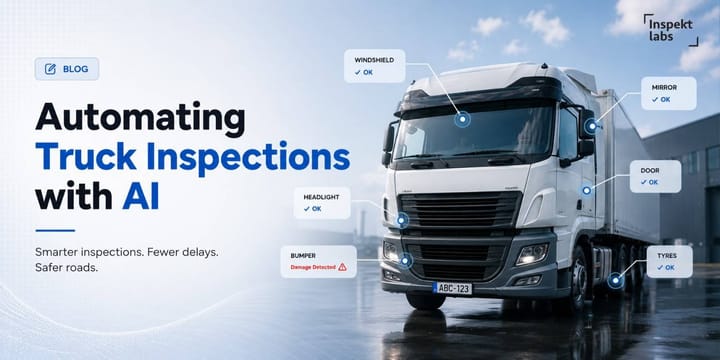
For automotive fleets specifically, the equivalent is continuous AI-based vehicle inspection at check-in and check-out. Catching incremental damage early prevents small issues from becoming expensive mechanical failures. Inspektlabs' automated inspection system supports this with timestamped condition records at every vehicle handover, creating the data trail needed to track deterioration over time.
#2 - AI Vehicle Inspection Automation (The Highest-ROI Lever)

The Problem with Manual Inspection at Scale
Manual vehicle inspections are unscalable. At $100 to $300 per vehicle per visit, the economics break down quickly for any operator managing more than a handful of vehicles. Add the scheduling overhead, travel time, inconsistent grading between different inspectors, and paper-based reporting, and you have a process that costs significant money and still produces unreliable output.
What AI Inspection Replaces
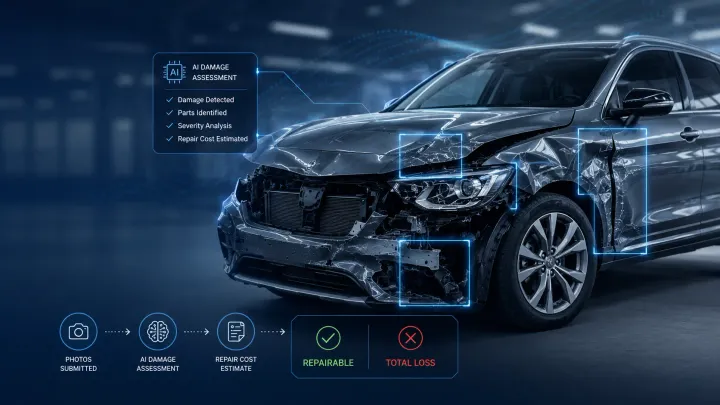
Inspektlabs' AI vehicle inspection works through guided photo and video capture. The vehicle owner, driver, or fleet operator photographs the vehicle using a smartphone app. The media uploads to the cloud. An AI model trained on over 10 million vehicle damage images analyses the footage, identifies visible damage across 100+ vehicle components, and generates a structured condition report in approximately 90 seconds.
No field inspector. No scheduling. No travel. No paper report.
The ROI Case
Inspektlabs data indicates that AI-powered inspection reduces inspection costs up to 90% compared to manual field inspection. Operators report 80% reduction in manual effort and 50+ hours saved per week across inspection workflows. For a typical fleet scenario, this translates to approximately $84,000 in annual savings.
Use Cases
- Pre-repair and Post-repair inspections: Repair workshops/networks can use AI-powered tools like Inspektlabs to inspect the vehicle and identify damage in less than 90 seconds. This report can then be compared with the post-repair inspection report to ensure that there are no discrepancies or scope of fraud during repair.
- Fleet check-in and check-out: Documents vehicle condition at every driver handover. Incremental damage is tracked automatically, creating a timestamped record for liability and maintenance decisions.
- Motor auction condition reports: Pre-bid condition reports for remote buyers replace manual grading, with AI-verified documentation that supports buyer confidence and reduces post-sale disputes.
For more on how the AI inspection platform works: Inspektlabs Damage Detection or get in touch with the team.
#3 - Design-Driven Cost Reduction and Value Engineering in Automotive

For OEMs and vehicle manufacturers, design is where the majority of product cost is determined. Industry estimates consistently place around two-thirds of a vehicle's unit cost as fixed at the design and specification stage. Addressing cost at this stage produces compounding savings across the full production run.
Frugal engineering applied to EV platforms is an area of growing focus. Standardising component libraries across model lines, rationalising the number of unique parts, and designing for simplified assembly all reduce both production cost and supply chain complexity. This approach is particularly relevant for the non-differentiating components where brand perception does not depend on specification uniqueness.
McKinsey's 'should-costing' methodology uses component-level cost modelling to identify where actual costs exceed the theoretically achievable cost. Applied to software-defined vehicle architecture, this approach can identify significant cost reduction opportunities in software development overhead through standardisation and code reuse across platforms. Estimates in the literature suggest potential software cost reductions of up to 30% through this kind of platform approach, though results depend heavily on implementation maturity.
Automotive Partnerships for Cost Reduction
Some of the most effective cost reduction initiatives in automotive partnerships come not from traditional OEM supply chain agreements but from operational data-sharing arrangements between complementary parties.
Insurer-fleet partnerships
Fleet operators and insurers share an interest in accurate vehicle condition data. When a fleet operator uses AI inspection at every vehicle handover, the insurer gains access to a verified, timestamped condition history that makes claims assessment faster and disputes less common. Sharing that data formally, through structured data agreements, reduces duplicate inspection work on both sides. The insurer does not need to send a field adjuster for every claim because the AI inspection record already documents the vehicle's pre-incident condition.
AI inspection vendor partnerships
The best example of cost reduction in auto industry partnerships at the operational level is the integration model between AI inspection vendors and fleet operators or insurers. Rather than building in-house inspection capability, businesses integrate platforms like Inspektlabs via API into their existing workflow. The fleet operator or insurer gets the inspection infrastructure without the development cost or the ongoing maintenance burden. The vendor handles model training, quality assurance, and report generation. Effective cost reduction initiatives in automotive partnerships at this level typically replace a fixed inspection cost with a variable per-inspection fee that scales with usage.
Shared data models for claims
Joint R&D investment between insurers and repair networks to develop shared damage cost models is an emerging area. When the insurer and the repair network agree on a common data structure for damage assessment, the back-and-forth of manual estimate negotiation is reduced. AI-generated condition reports that both parties accept as a baseline make this agreement much easier to operationalise.
#5 - Telematics and Fleet Intelligence

Telematics has been present in fleet management for decades. What has changed is the quality of the data, the cost of the hardware, and the sophistication of the analysis tools available to interpret it.
At the basic level, telematics reduces fleet costs through route optimisation, which cuts fuel consumption and driver hours. It also provides utilisation data that helps fleet managers identify underused vehicles that can be removed from the fleet, reducing fixed costs without affecting operational capacity.
The more significant cost opportunity is in maintenance scheduling. Telematics data on engine performance, brake usage, tyre wear indicators, and other parameters feeds predictive maintenance models that schedule interventions before breakdowns occur. Combined with AI inspection at each vehicle handover, fleet operators can build a continuous picture of every vehicle's condition and maintenance requirements.
Incremental damage tracking is a specific application of this. Regular AI inspections at check-in and check-out document condition changes between uses, attributing damage to specific rental or shift periods. This directly reduces dispute costs and improves driver accountability. See how this works in practice: Automated Incremental Damage Tracking for Fleet Companies and AI Vehicle Inspection: Transforming Fleet Management.
Telematics also supports fraud prevention at the claims stage. When an insurer has access to telematics data alongside an AI condition report, the incident narrative submitted by the claimant can be cross-referenced against the actual driving data. Inconsistencies flag for review.
#6 - Over-the-Air (OTA) Software Updates
The automotive OTA update market was valued at $5.2 billion in 2025 and is projected to grow to $25 billion by 2035 at a CAGR of 17%, according to Global Market Insights (2026). The growth reflects how quickly vehicle software management has moved from a nice-to-have to an operational necessity.
For fleet operators and OEMs, OTA updates directly reduce cost in three ways.
First, they eliminate dealer recall visits for software-related issues. A firmware update that previously required a dealership appointment can be pushed remotely overnight.
Second, they reduce warranty service costs by resolving known software bugs before they trigger customer complaints or formal warranty claims.
Third, they patch cybersecurity vulnerabilities without taking vehicles off the road.
For commercial fleet operators, OTA updates also enable remote feature configuration. Driver behaviour parameters, speed limiters, and telematics settings can be adjusted fleet-wide without a workshop visit. The operational time saving is significant at scale.
#7 - Regulatory Compliance as Cost Avoidance

Compliance is often framed as a cost burden. The more accurate framing for automotive businesses is cost avoidance. Penalty exposure for non-compliance with EU GDPR, Euro NCAP requirements, and data privacy regulations in telematics consistently exceeds the cost of building compliant systems from the start.
Proactive compliance investment is a one-time cost. Regulatory penalties, legal fees, and reputational damage from non-compliance are not. The cost differential is significant, particularly for businesses operating across multiple EU jurisdictions where enforcement consistency is increasing.
#8 - Workforce Training and EV Transition Investment

The shift to electric vehicles is creating a skills gap in automotive operations. Technicians trained on internal combustion engine vehicles need upskilling to work effectively on EV platforms: high-voltage systems, battery management, software diagnostics, and regenerative braking systems all require different knowledge and safety protocols.
The business case for investing in EV upskilling is straightforward. A technician who cannot work on EV platforms is either a recruitment cost (replace with someone trained) or a productivity cost (vehicles wait for someone qualified). The one-time investment in training compresses both. Workshop throughput improves, warranty repair capacity increases, and the cost of outsourcing EV-specific work to specialist centres decreases.
For fleet operators, in-house EV servicing capability reduces dependency on external providers for routine maintenance and minor repairs. That dependency is expensive: specialist external labour rates for EV work are materially higher than standard rates in most markets, and availability is not always predictable.
Training investment also supports retention. Skilled technicians who receive development investment are more likely to stay. In a market where technician shortages are a documented constraint on workshop capacity, retention has a direct financial value.
How Inspektlabs Helps Cut Automotive Costs
Across the strategies covered in this guide, Inspektlabs addresses the inspection, claims, and fleet operations cost drivers directly.
- For repair networks: AI-powered inspections help save money on inspector costs, keep a proper track of all the damage (which helps avoid rework in the future), and with the right integrations, can also help take a. Repair vs. replace decisions on every part and b. Help save money by finding the right vendors for part procurement.
- For fleet operators: AI check-in and check-out inspection replaces manual grading at every vehicle handover. Incremental damage is tracked automatically. Maintenance issues are flagged early, before small faults become expensive repairs.
- For both usecases : API integration into existing systems means no wholesale platform replacement. Reports are structured, retrievable, and auditable.
Putting It Together: A Framework for Automotive Cost Reduction in 2026
The 8 strategies covered in this article fall into three practical categories.
- Technology-first strategies (predictive maintenance, AI vehicle inspection, telematics, OTA updates) deliver the highest measurable ROI and the fastest payback. They replace variable, unscalable manual costs with consistent, data-driven processes. These are the strategies where the business case is clearest and the implementation path is most defined.
- Process and partnership strategies (design-driven cost reduction, value engineering, operational partnerships, shared data models) require more coordination but create structural cost advantages that are harder for competitors to replicate. The insurer-fleet data-sharing model and AI inspection vendor partnerships are the most immediately actionable for the ICP audiences of this article.
- People and compliance strategies (EV workforce training, regulatory compliance investment) are framed correctly as cost avoidance rather than cost reduction. Done proactively, they prevent larger costs downstream. Done reactively, they are expensive.
The businesses making the most progress on automotive cost reduction in 2026 are not treating these as separate initiatives. They are building connected systems where AI inspection data feeds claims workflows, maintenance scheduling, and fraud detection simultaneously. That is where the compounding value is.
Frequently Asked Questions
- What are the most effective cost reduction strategies in the automotive industry?
AI inspection automation and predictive maintenance deliver the highest measurable ROI. AI inspection can reduce per-inspection costs by up to 90%. Predictive maintenance reduces unplanned maintenance costs by 18 to 25%. Telematics and OTA updates provide additional structural savings at scale. - How does AI reduce operational costs in automotive businesses?
AI cuts costs across three areas. Photo-based damage detection replaces field inspectors. Predictive maintenance prevents costly unplanned breakdowns. Automated claims processing reduces manual handling time. Each application removes a variable cost and replaces it with a consistent, lower-cost process. - How can automotive fleets reduce operational costs with AI?
Inspektlabs' AI vehicle inspection replaces manual checks at every shift handover. It detects incremental damage early, before small issues escalate. Reports are generated in 90 seconds, with no field inspector needed. Fleets reduce inspection costs, dispute resolution time, and maintenance spend simultaneously. - How does vehicle inspection automation save money for fleet operators?
Manual inspections cost $100 to $300 per vehicle per visit. AI inspection removes the field inspector, the scheduling delay, and the paper report. Cost per inspection drops significantly. Operators also save on dispute resolution, because every handover is documented with a timestamped, tamper-proof AI report.