Car Rental Industry Challenges and the Technologies Reshaping It
Consumers now demand integrated services rather than a one-off purchase. By incorporating these changes in the car rental industry, businesses can capitalize on the changing customer behavior and provide the right rental solutions.
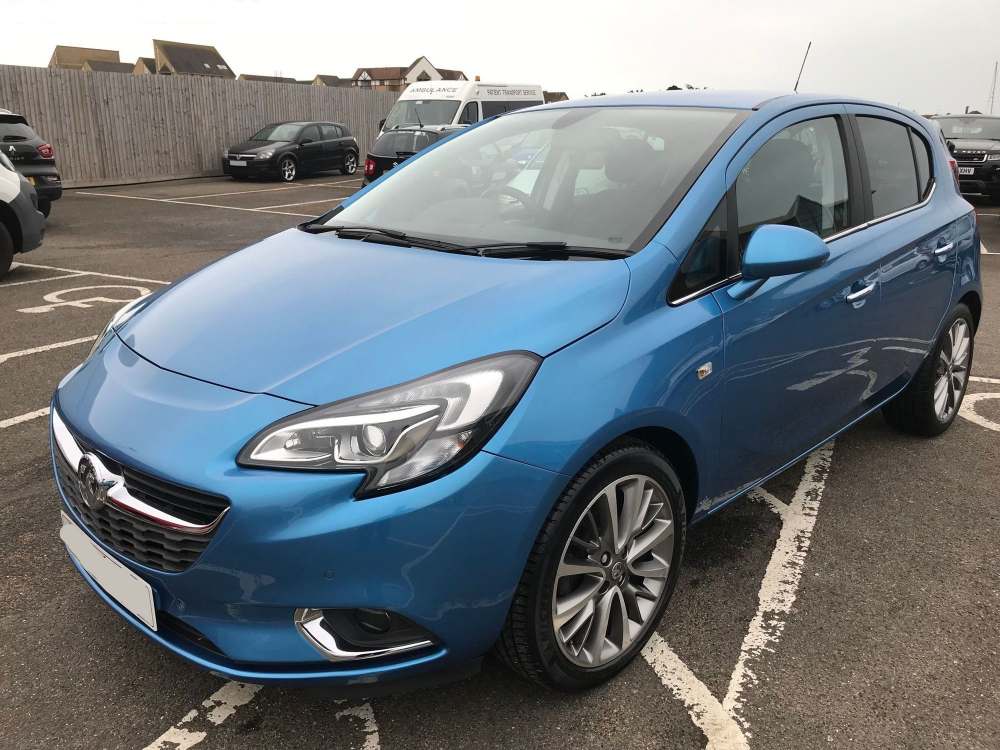
The car rental industry provides short-term vehicle access to consumers and businesses, operating fleets that require constant inspection, maintenance, and turnover. It is a high-volume, thin-margin business where operational efficiency determines profitability.
The pressures on the sector have shifted. Fleet acquisition costs remain elevated. Vehicle downtime directly reduces revenue-generating days. Damage disputes at return generate customer complaints and administrative cost. Electric vehicle integration has introduced a new set of operational problems that the industry is still working through.
This article covers what the car rental industry looks like today, the operational challenges rental businesses are facing, the trust questions around AI vehicle assessment, and the technologies reshaping how rental operations work.
What Is the Car Rental Industry Today?
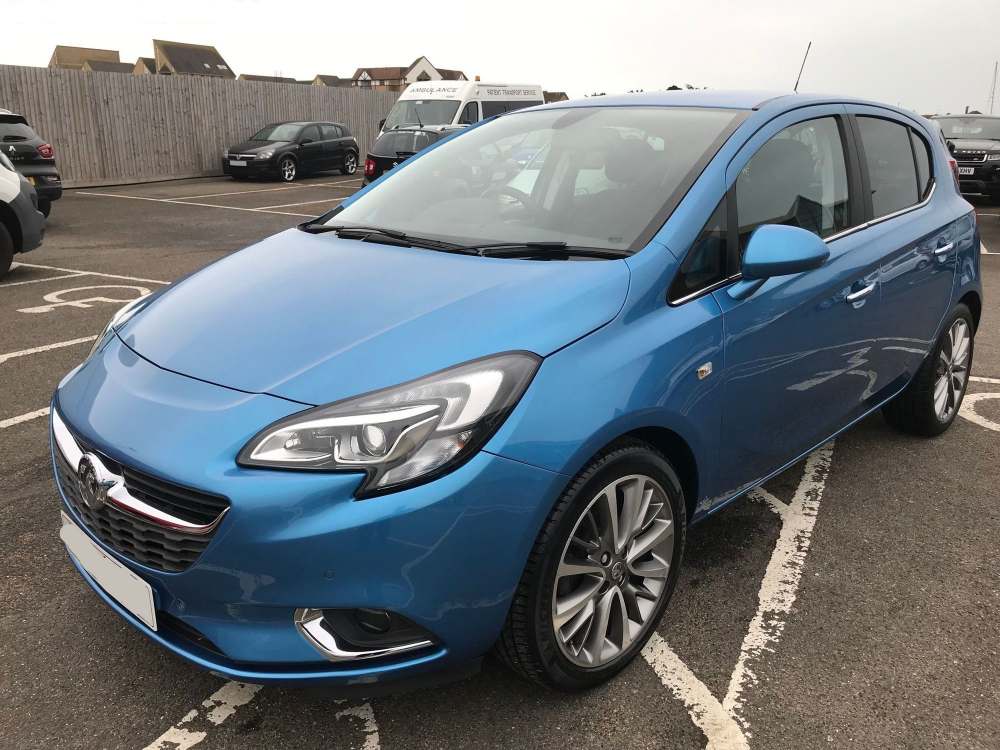
The car rental industry has moved well beyond the airport counter model that defined it for decades. Today it spans airport and city-centre branches, peer-to-peer platforms, corporate leasing, subscription services, and long-term rental models that compete directly with vehicle ownership.
Digital distribution has changed how customers book. Integration with online travel agencies, mobile-first booking, and dynamic pricing are now standard rather than differentiators. According to Technavio's car rental market analysis, operators using AI-powered revenue management and dynamic pricing algorithms report yield optimisation of over 15% during peak seasons.
The business model has also diversified. Corporate car leasing and long-term subscription models now offer businesses an asset-light alternative to fleet ownership, with reported cost savings of up to 20% on fleet management compared to owning vehicles outright. For rental operators, this means a shift from purely transactional short-term rentals toward longer contract relationships with different operational requirements.
Electric vehicles are the other structural change. Rental operators offering EV options report a 15% higher booking rate in environmentally conscious urban markets, which creates commercial pressure to expand EV fleets even where the operational infrastructure is not fully ready.
What Challenges Is the Car Rental Industry Facing?
Rental business challenges cluster around four operational areas.
Fleet acquisition and holding costs: Vehicles are the single largest cost line in a rental operation. Acquisition prices, financing costs, and residual value risk all directly affect margin. When a vehicle depreciates faster than projected, or has to be held longer than planned, the economics of that unit degrade.
Vehicle downtime: Every day a vehicle sits off the road is a day it generates no revenue. Downtime comes from maintenance, damage repair, and administrative delays including inspection backlogs. For a rental operator, utilisation rate is the metric that connects fleet size to revenue, and downtime is what erodes it.
Manual inspection bottlenecks: Inspection is required at every vehicle handover. At scale, the manual walkaround becomes a throughput constraint. Under time pressure, inspection quality degrades. Damage gets missed at check-out and appears as a dispute at return.
Damage disputes: A disputed damage charge costs more in administrative time, customer service handling, and potential chargeback than the repair itself in many cases. Disputes also drive negative reviews, which affect future bookings. The root cause is usually the absence of clear, timestamped documentation of the vehicle's condition at check-out.
EV integration: Electric vehicles introduce charging infrastructure requirements, longer turnaround times between rentals, and customer education needs that combustion vehicles do not. This is covered in more detail below.
Is AI Assessment Trusted in Car Rental Yet?
Not fully, and the reasons are worth understanding honestly.
AI-based vehicle assessment in rental has generated significant customer pushback. Forbes reported in November 2025 on customer complaints following one major operator's rollout of automated scanning, with early cases where charges were applied without a clear path to human review. The same reporting noted that the operator stated more than 97% of nearly one million scanned rentals showed no billable damage.
Those two facts are both true, and the tension between them is the real story. The detection itself is accurate. The vast majority of rentals produce no charge. The complaints arose from how the findings were communicated and billed, not from whether the AI correctly identified damage.
What this means for the industry is specific. AI assessment earns trust when three things are in place.
- The customer can see their own inspection record at check-out, not only after a charge is applied at return.
- A human agent reviews any flagged finding before a billing decision is made.
- There is a clear, accessible process for the customer to contest a charge and reach a person.
Automated detection without transparent evidence sharing creates an asymmetry where the rental company holds all the documentation and the customer holds none. That asymmetry generates disputes regardless of detection accuracy. Transparent, documented evidence available to both parties is what resolves the trust problem, not better detection alone.
How Are Rental Companies Automating Check-In and Check-Out Inspections?
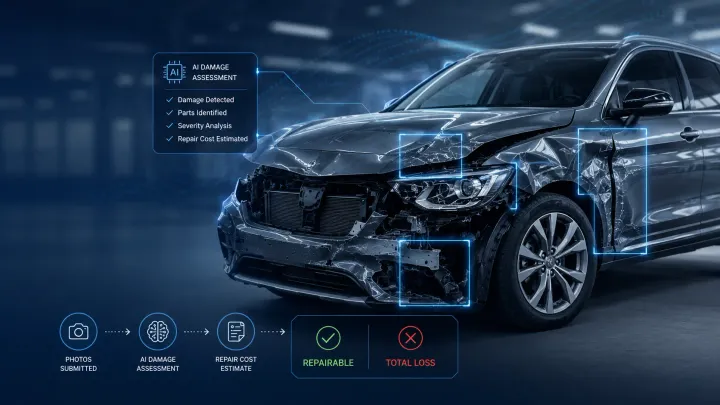
Rental car inspection automation replaces the manual walkaround at both handover points with a guided digital capture process. The workflow is identical at check-out and check-in, which is what makes the before-and-after comparison possible.

- Guided capture at check-out: The agent or customer photographs the vehicle from prompted angles using a mobile app. The guided flow ensures consistent coverage regardless of who performs the capture.
- Automated quality validation: Submitted images are checked for clarity, lighting, and coverage. Substandard images are rejected and re-prompted before the assessment runs.
- AI damage detection: The model identifies any visible existing damage and classifies each finding by type and severity.
- Timestamped check-out report: A condition report is generated documenting the vehicle at the moment of handover. Both the operator and the customer can access it.
- Return capture and comparison: The same guided process runs at return. The system compares the return record with the check-out record and can flag potential changes for review.
- Human review before billing: A flagged finding routes to an agent with side-by-side check-out and check-in imagery. The agent makes the final billing decision.
The operational benefit is measurable. Technavio reports that the industry's shift to automated vehicle inspection has reduced vehicle downtime by 15%, improving fleet readiness. Automation can shorten inspection workflows, standardize documentation, and help rental teams compare vehicle condition across check-in and check-out.
Real-World Example: HolidayCars
Inspektlabs has applied smartphone-based remote inspection in the rental industry through its work with HolidayCars. The workflow guides customers through vehicle capture using a smartphone, creating digital inspection records without requiring an inspector to be physically present. The implementation has processed more than 30,000 inspections. Read the HolidayCars case study
What Other Technologies Are Transforming Car Rental Operations?
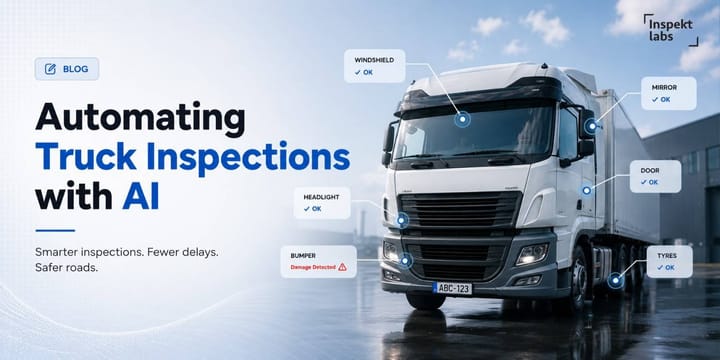
AI inspection is one component of a broader operational technology stack. Four other technologies are having equally significant effects on how rental businesses run.
Telematics and Fleet Monitoring
Telematics devices provide real-time vehicle location, mileage, fuel or charge level, and driving behaviour data. For rental operators, this supports accurate mileage billing, theft recovery, and identification of vehicles being used outside agreed terms. Aggregated across a fleet, telematics data also informs utilisation analysis: which vehicles are being booked, which sit idle, and where redistribution would improve revenue. This data feeds directly into fleet vehicle lifecycle management decisions about when to replace or resell.
Contactless Check-In and Digital Rentals
Keyless entry, digital key delivery via smartphone, and app-based check-in remove the counter queue from the rental experience. Customers book, verify identity, and access the vehicle without an agent interaction. Technavio reports operators offering contactless vehicle access see a 40% reduction in customer wait times at pickup locations. For the operator, this reduces staffing requirements at peak periods and increases the number of transactions a branch can handle.
Predictive Maintenance and Fleet Planning
Predictive maintenance uses telematics and sensor data to forecast component failures before they cause a breakdown. Rather than servicing on a fixed schedule or reacting to a fault, operators schedule maintenance based on actual vehicle condition and usage patterns. The direct benefit is reduced unplanned downtime, which is the most expensive kind. A vehicle scheduled out of service for two hours of planned maintenance costs far less than one taken off the road unexpectedly during a peak booking period.
360 Degree Video Vehicle Inspection
A 360 degree video walkaround captures the vehicle in a single continuous recording rather than a series of static photos. The value is in documentation completeness: a continuous video provides spatial context that individual images do not, and is harder to selectively edit. For rental operators, it serves as the evidence layer supporting damage attribution. See 360 video vehicle inspection for how this works in practice.
EV Fleet Integration Challenges
Electric vehicles create operational problems that combustion fleets do not. Charging infrastructure is the primary constraint: a rental branch needs sufficient charging capacity to turn vehicles around between bookings, and public charging availability affects how far customers can travel. Turnaround time is longer, since a vehicle returned with a low charge cannot be immediately re-rented.
Cost is the second issue. EV acquisition prices remain higher than equivalent combustion vehicles in most markets, and residual value projections are less certain. Battery health degradation over the vehicle's rental life affects resale value in ways the industry is still learning to price.
Customer misuse is a third factor. Renters unfamiliar with EVs may return vehicles with very low charge, use incompatible charging methods, or trigger battery management issues through poor charging practice. Clear customer education at handover reduces this, but adds to the check-out process.
For Car Rental Companies
Objective inspection reports, no room for dispute
AI vehicle inspection generates a full damage report in minutes, before and after every rental.
What Is Next for the Car Rental Industry?
Three directions are shaping the next phase of the industry.
Subscription and long-term models: Corporate and consumer vehicle subscription services compete directly with ownership. For rental operators, this shifts revenue from high-frequency short bookings toward longer contracts with more predictable utilisation, and changes the inspection cadence from per-rental to periodic.
Autonomous and connected vehicles: Connected vehicle data will increasingly integrate directly with rental management systems, providing real-time condition and usage data without a separate telematics installation. Autonomous vehicle rental remains further out commercially, but the vehicle-to-grid and connected-fleet infrastructure being built now is a step toward it.
Regulatory pressure on transparency: The AI assessment controversy has drawn regulatory and political attention in some markets. Operators using automated damage detection should expect increasing expectations around evidence disclosure, dispute processes, and human oversight of automated charging decisions.

Key Takeaways
- The car rental industry faces rising fleet costs, vehicle downtime, inspection bottlenecks, customer disputes, and EV integration challenges.
- Technology is reshaping rental operations through AI inspection, telematics, contactless rentals, predictive maintenance, and connected vehicles.
- Automated inspections can standardize check-in and check-out documentation and make vehicle condition easier to compare.
- AI assessment needs transparent evidence, customer visibility, and human review to build trust.
- EV adoption adds new operational requirements around charging, turnaround time, vehicle costs, and customer education.
- Rental operators increasingly need integrated technology across fleet, inspection, customer experience, and vehicle lifecycle management.
The car rental industry operates on thin margins where vehicle utilisation and operational efficiency determine profitability. The current challenges are fleet cost, downtime, inspection bottlenecks, damage disputes, and EV integration.
Technology addresses several of these directly. Telematics improves utilisation visibility. Contactless check-in reduces wait times and staffing requirements. Predictive maintenance reduces unplanned downtime. AI inspection can reduce manual inspection workload and create a more consistent evidence base for reviewing damage disputes.
The operators seeing the most benefit are those treating these as an integrated operational stack rather than isolated tools, and those pairing automated detection with transparent evidence sharing and human oversight.
Frequently Asked Questions
What are the biggest challenges in the car rental industry?
The main challenges are fleet acquisition and holding costs, vehicle downtime that reduces revenue-generating days, manual inspection bottlenecks at high volume, damage disputes at vehicle return, and the operational complexity of integrating electric vehicles into existing fleets.
How is the rental car market changing?
The market has diversified beyond the traditional airport counter model into peer-to-peer platforms, corporate leasing, and subscription services. Digital booking, dynamic pricing, and contactless vehicle access are now standard. Electric vehicle demand is rising, with EV rental options seeing a 15% higher booking rate in urban markets according to Technavio.
Is AI vehicle assessment trusted in car rental yet?
Partially. Detection accuracy is not the issue: over 97% of AI-scanned rentals show no billable damage. Trust problems arose from automated billing without human review and limited customer access to inspection evidence. AI assessment earns trust when customers can see their own check-out record and a human reviews any flagged finding before billing.
How do rental companies automate check-in and check-out inspections?
A guided mobile app captures the vehicle from required angles at both check-out and check-in. AI validates image quality, detects visible damage, and generates a timestamped condition report. The system compares both records automatically and flags any new damage. A human agent reviews flagged findings before any charge is applied.
What technology is transforming car rental operations?
Five technologies are having the most operational impact: AI-powered inspection automation, telematics for real-time fleet monitoring, contactless check-in with digital keys, predictive maintenance for downtime reduction, and 360 degree video documentation for damage evidence.
How does AI inspection reduce vehicle downtime for rental fleets?
AI inspection compresses the check-in and check-out process from 15 to 30 minutes per vehicle to under five minutes, removing the inspection backlog that keeps vehicles off the road between rentals. Technavio reports the industry's shift to automated inspection has reduced vehicle downtime by 15%.
What is the best inspection solution for car rental fleets?
The most effective solution combines guided capture that works at any location without fixed hardware, AI damage detection at 90 to 95% accuracy, automatic before-and-after comparison across check-out and check-in records, renter-visible timestamped reports, human review before billing, and API integration with existing rental management systems.