Complete Vehicle Damage Checklist for Inspections (With Examples)
When vehicle damage goes undocumented, it creates problems down the line. Claims get disputed, liability becomes unclear, and the cost of resolving it often exceeds the cost of the damage itself.
Whether you are managing insurance claims, fleet operations, or vehicle rentals, having a complete and accurate damage reference is not optional.
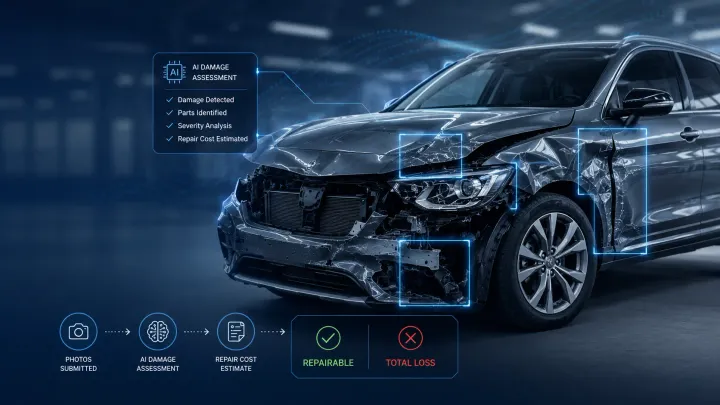
This vehicle damage checklist covers all types of vehicle damage across every car damage type, how severity is classified, which parts are most vulnerable, and how AI vehicle inspection now detects all of it across 100+ vehicle components in a single inspection.
What is a Vehicle Damage Checklist?
A vehicle damage checklist is a structured list of all car parts and damage types inspected during a vehicle inspection. It helps insurers, fleet operators, and rental companies document scratches, dents, structural issues, and internal damage to ensure accurate claims and condition reporting. Quick Definition
Understanding Vehicle Damage: Types, Severity, and Categories
Not all damage is equal. A key scratch on a door panel and a buckled A-pillar both show up on an inspection report, but they carry very different implications for safety, repairability, and insurance outcome. Before getting into the parts list, it helps to understand how damage is actually classified.
Damage by Type
- Cosmetic damage: Surface-level issues that don't affect how the car drives. Scratches, paint chips, minor dents, and interior stains fall here. They matter for resale value and rental returns, but they're not safety risks.
- Structural damage: Damage that compromises the vehicle's frame or body shell. This includes deformed pillars, crumpled chassis sections, and post-collision misalignment. It affects crash performance and is expensive to repair correctly.
- Mechanical damage: Anything affecting the drivetrain, brakes, suspension, or engine. Often invisible from the outside. A car can look fine and have a cracked suspension arm.
- Functional damage: Components that no longer work as designed. Deployed airbags, broken locks, non-functioning lights, or jammed doors. These directly affect safety and usability.
Damage by Severity
Insurers and fleet operators use severity tiers to triage claims and set repair priorities. Here's how the tiers typically map out.
Which Car Parts Are Most Prone to Damage?
Some parts take damage far more often than others. The Box-Kat 2025 Vehicle Damage Report notes that hail alone accounts for $8 to $15 billion in vehicle damage claims annually in the US. That is almost entirely roof, bonnet, and panel damage. Beyond weather, the pattern of everyday damage is fairly predictable.
- Front and rear bumpers: The most frequently damaged exterior part. Parking impacts, low-speed collisions, and rear-end shunts all target bumpers first. They're designed to absorb impact, which means they absorb damage too.
- Windshields: Chips and cracks from road debris are the number one glass claim. A single stone at motorway speed can cause a chip that spreads to a full crack within weeks if not repaired.
- Doors: Parking lot door dings are among the most reported cosmetic claims. Rear doors tend to take more hits than front doors because drivers are less aware of them when opening in tight spaces.
- Tyres and rims: Kerbing, potholes, and slow punctures are a constant in fleet and car rental operations. Rim damage is often disputed because it's not always immediately obvious at check-out.
- Headlights: Cracked or broken headlight assemblies are costly to replace on modern vehicles, particularly those with LED or adaptive units. They're also a common fail point on safety inspections.
Who Should Use This Vehicle Damage Checklist?
This vehicle damage checklist is designed for professionals who need accurate and consistent inspection reports across multiple vehicles and scenarios.
- Insurance companies: To standardize damage assessment and reduce claim disputes
- Fleet operators: To track vehicle condition across large fleets and reduce maintenance costs
- Car rental companies: To document damage at check-in and check-out and avoid disputes
- Used car marketplaces: To ensure transparency in vehicle condition during resale
- Inspection agencies: To improve reporting accuracy and reduce manual errors
Guided Capture
Capturing all vehicle damages consistently is challenging
Use guided photo and video capture to ensure no damage is missed during inspections.
Parts Covered During a Vehicle Inspection
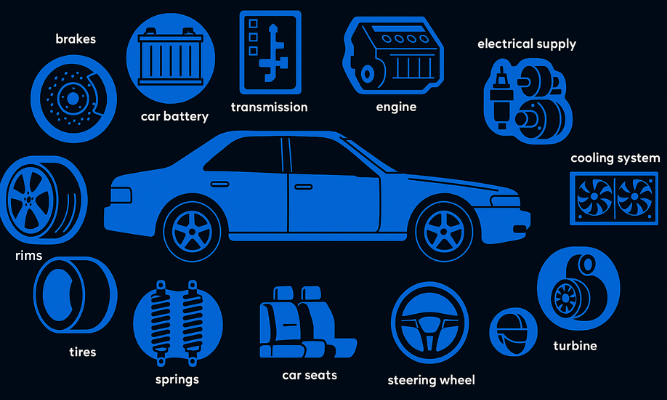
A thorough vehicle damage inspection goes well beyond bumpers and glass. Inspektlabs' AI vehicle inspection system covers over 100 parts across the exterior, interior, and hidden internal components of a vehicle.
Lighting Components
View essential car lighting and glass components like headlights, tail lights, and windshields assessed for visibility and safety.
| Tail Light |

|
| Headlight |

|
| Fog Light |

|
| Fog light cover |

|
| Bottom Reflector |

|
Glass & Visibility Component
check glass and visibility car parts, including windshield and windows, inspected during vehicle damage assessment for safety and clarity.
| Window Glass |

|
WHEELS & BRAKING
Check wheel and braking components including rims, brake disc and pad disc evaluated for wear, alignment, and road safety.
| Wheel Rim |

|
| Brake Disc |

|
| Brake Pad |

|
Body & Exterior Parts
Below are the key body and exterior car parts, including panels, bumpers, and doors, inspected during vehicle damage assessment and repair.
| Qtr Extender |

|
| Bumper Protection Strip |

|
| Door Moulding |

|
Interior Components
Explore interior car parts, including seats, steering wheel, and trim components, inspected during vehicle damage assessment.
| Interior Trim |

|
| Driver Seat |

|
| Passenger Seat |

|
| Rear Seat |

|
| Steering wheel |

|
Utility & Truck Body Components
Here are the key utility and truck body components, including cargo doors, loading systems, and structural parts, inspected during vehicle damage assessment.
| Barn Door |  |
| Loading Door |  |
| Tail Lifts |  |
| Bulkhead |  |
| Frails |  |
| Lashing Hooks |  |
| Racking |  |
| Truck Bed floor |  |
| Front Panel |  |
Front Vehicle Parts (with Images)
Explore key front exterior car parts, including bumper, hood, and grille components used in vehicle damage assessment and repair.
Front bumper |
 |
Front bumper cover |
 |
Car Hood |
 |
Bumper Grill Top |
 |
Bumper Grill Bottom |
 |
License Plate |
 |
Inner lining |
 |
Bumper & Sensor Parts (with Images)
Understand critical car sensors and small components such as parking sensors, licence plate fuel door parts used in modern vehicle systems.
| Bumper grill top |
|
| Bumper grill bottom |
|
| License plate |
|
| PDC sensor |

|
Side Vehicle Parts (with Images)
Discover side body car parts including doors, fenders, and panels commonly checked for dents and collision damage.
| Fender |

|
| Car tyres |

|
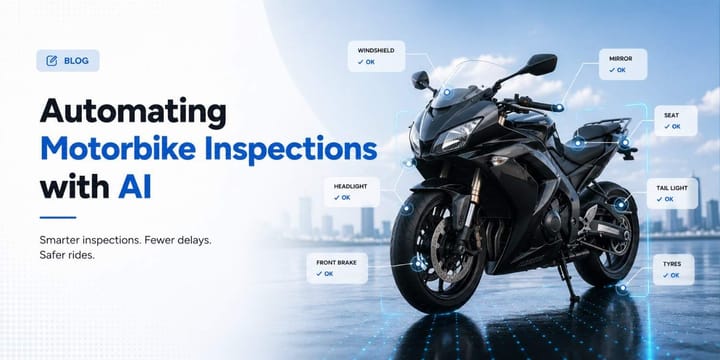
The vehicle damage detection software also covers commercial vehicle-specific components: barn doors, loading doors, tail lifts, bulkheads, lashing hooks, racking, truck bed floors, trailers, and undercarriage. For motorcycles, it extends to fuel tanks, front fenders, rear fenders, footpegs, handlebar components, and exhaust systems.
Types of visible damage
Inspektlabs AI is trained to identify various types of external and interior damage across all parts listed above. These damages include -
Exterior
Car damage types on the exterior break down into four meaningful sub-groups. Each has different implications for repair cost, insurance classification, and inspection priority.
- Surface and Cosmetic Damage
Scratches, paint chips, minor spots, and paint peeling all sit in this category. They don't affect structural integrity or function, but they do affect residual value significantly. A car with visible paint damage sells for less, rents for less, and is more likely to generate disputes at return. For insurers, cosmetic damage is the most commonly disputed category because it's subjective without documented photographic evidence.
- Scratch / Spot / Chip: Often caused by minor contact, road debris, or wear. Classified as minor unless the metal is exposed and risk of rust develops.
- Paint peeling (minor / major): Minor peeling is a cosmetic issue. Major paint peeling across a panel indicates potential prior repair work or delamination, which can be a red flag in pre-purchase inspections.
- Structural and Deformation Damage
This is where car damage types start to affect safety. Dents range from shallow (PDR-fixable, low cost) to deep (panel replacement required) to design dents, where the damage follows body lines and is harder to assess visually. Hail damage produces arrays of shallow dents across horizontal panels, typically the roof, bonnet, and boot lid. Dislocation refers to misaligned body panels, often a sign of prior impact that wasn't fully corrected.
- Shallow dent: Paintwork intact, metal displaced slightly. Often repairable via paintless dent repair (PDR).
- Deep dent: Metal significantly displaced, often with paint cracking. Panel repair or replacement likely.
- Design dent: Impact along a styled crease or body line. Difficult to repair without repainting.
- Hail damage: Multiple small dents across a surface area, caused by weather impact. Claims can be high-value even when individual dents look minor.
- Dislocation: Misaligned panels, gaps, or proud edges. Can indicate prior collision damage.
- Glass Damage
Glass damage is one of the most common single-item claims in motor insurance. Detecting it accurately relies on real-time glass damage detection technology that can tell real cracks apart from reflections and glare. A chip left unrepaired spreads to a crack, often requiring full windscreen replacement. For fleet and rental operators, undocumented glass damage at check-in is a frequent dispute trigger.
- Glass chip: Small impact point, usually repairable if caught early.
- Crack: Linear break extending from a chip or impact point. Replacement is usually required once it enters the driver's sightline.
- Spider crack: Radial fracture pattern from a single impact point. Almost always requires replacement.
- Shattered glass: Full panel failure. Immediate safety risk and replacement required.
- Safety-Critical Damage
These are the damage types that trigger immediate escalation in any inspection workflow. Deployed airbags confirm a significant collision has occurred, regardless of what the bodywork shows. Fire damage and fluid leakage indicate structural or mechanical compromise that goes beyond the visible surface. For insurers, these are the flags that move a claim from a cosmetic assessment to a total loss evaluation.
- Airbag deployed: Confirms a high-impact collision. The vehicle's SRS system needs full assessment.
- Fire damage: Can affect structural integrity, wiring, and fluid systems simultaneously.
- Fluid leakage: May indicate brake line, oil, or coolant damage. A safety and mechanical concern.
Interior Damage
Interior damage is underreported in most inspection frameworks. It doesn't affect roadworthiness, so it doesn't show up in safety tests. But it hits residual value hard — and it's a major source of end-of-lease and rental return disputes.
The most commonly disputed interior damage types are seat rips and burns (hard to prove when they occurred), stitching tears, and excessive staining. Stains on upholstery and carpeting often indicate water ingress, which can point to a leak elsewhere in the vehicle. Interior trim damage and broken door pads, while minor individually, add up to a significant deduction at lease return.
Read more about the AI car damage detection methodology
Types of Vehicle Damages Detected Using AI Vehicle Inspection Software
Below are the vehicle damage types detected during AI-powered vehicle inspection, covering surface, structural, glass, mechanical, and interior damages for accurate assessment.
Surface Damage Types
Below are the common surface-level damages affecting vehicle appearance and paint quality.
| Spot or Dirt |  |
| Scratch or Spot |  |
| Rust |  |
| Major Paint Peeling |  |
| Minor Paint Peeling |  |
Structural Damage Types
Below are damages affecting vehicle body structure and alignment.
| Dislocation |  |
| Shallow Dent |  |
| Design Dent |  |
| Deep Dent |  |
Breakage & Severe Damage
Below are major damages involving broken or heavily impacted components.
| Crack |  |
| Hole |  |
| Broken Parts |  |
| Fire Damage |  |
Glass Damage Types
Below are damages related to vehicle glass and windshield integrity.
| Glass Chip |  |
| Spider Crack |  |
| Shattered Glass |  |
Mechanical & Functional Damage
Below are damages affecting vehicle functionality and safety systems.
| Tyre wear and tear |  |
| Airbags Deployed |  |
| Fluid Leakage |  |
Interior Damage Types
Below are damages affecting the interior condition and upholstery of the vehicle.
| Stain (interior) |  |
| Rip / Burn / Hole / Tear |  |
| Stitching Rip (interior) |  |
| Excessive Interior Damage |  |
AI Damage Detection
Detect damage across 163 vehicle parts in seconds
From photos and videos, no physical inspection needed.
How AI Vehicle Inspection Software Detects Internal & Hidden Damage
Most visual inspection tools stop at the surface. Inspektlabs maps hidden internal damage using a two-pronged AI approach: direct detection from imagery where internal components are visible, and damage interpolation based on the nature and location of external impact.
When a front bumper takes a significant impact, the damage rarely stops there. The beam behind the bumper, the radiator support, the condenser, and even the engine guard can all be affected without showing visible damage from the outside. The same logic applies across every major exterior panel. Here's the internal mapping by region.
For fleet operators in the UK and EU, this level of internal mapping is particularly relevant for post-accident assessments before a vehicle returns to duty. For insurers in the US and Middle East, it provides documented evidence that goes beyond surface photographs.
For the full methodology behind how Inspektlabs detects internal damage, see Leveraging AI to Detect Internal Damages for Vehicle Inspection.
How AI Detects Vehicle Damage Across All These Parts
Understanding the vehicle damage list is one thing. Getting a consistent, documented assessment of it across every vehicle, every time, is where traditional inspection breaks down.
According to CCC's 2024 Crash Course Report, the average total cost of repair finished 2024 at over $4,730 per incident, up 3.7% year-over-year. When the underlying damage assessment is inconsistent or incomplete, those costs get disputed, delayed, or incorrectly settled. That's the real cost of manual inspection at scale.
Here's how vehicle damage detection software from Inspektlabs works:
- Photo and video capture via app: The vehicle owner, driver, or operator captures the vehicle from guided angles using a smartphone. The capture flow covers all required positions so nothing is skipped.
- AI scans 100+ parts simultaneously: The model doesn't check parts one at a time. It analyses the full set of submitted media and identifies every visible issue across all covered components in a single pass.
- Damage classified by type and severity: Each finding is classified against the damage taxonomy above—cosmetic, structural, glass, and functional- and assigned a severity level. The AI also evaluates the size of the damage, helping insurers and repairers make more accurate repair and replacement decisions. The AI doesn't just say 'there's a dent'; it says where, how deep, and what it's likely to cost.
- Condition report generated instantly: The full vehicle damage inspection report is ready in approximately 90 seconds. It's timestamped, tamper-proof, and structured for direct use in claims, fleet records, or lease-return documentation.
No field inspector required. No scheduling. No manual write-up. The car damage inspection process that used to take days now takes minutes, with a more detailed and consistent output than a physical survey can reliably produce.
Whether you manage a fleet of 500 vehicles or process thousands of insurance claims every month, the ability to detect every scratch, dent, and structural fault instantly changes how you work. Missed damage means disputes. Incomplete reports mean delayed settlements. And manual inspection at any meaningful scale is both slow and inconsistent.
The vehicle damage list above covers every car damage type the AI is trained to detect, from cosmetic chips to hidden rear beam damage. All of it accessible from a smartphone, in under five minutes, with a report that's ready to use immediately.
Key Takeaways
- A vehicle damage checklist ensures consistent inspection across 100+ parts
- Most common damage occurs in bumpers, glass, and doors
- Damage severity impacts insurance outcomes and repair cost
- AI vehicle inspection software detects damage faster and more accurately
- Automated inspections reduce disputes and improve claim processing
Frequently Asked Questions
What is a vehicle damage checklist?
A vehicle damage checklist is a structured list used during inspections to document the condition of a vehicle. It covers all major parts such as bumpers, doors, windshield, tyres, and lights, and records damage types like scratches, dents, cracks, and structural issues to ensure accurate reporting.
What does a vehicle inspection checklist include?
A vehicle inspection checklist includes exterior components (bumpers, doors, windshield, headlights), interior elements, tyres, and underbody parts. It also tracks damage types, affected areas, and severity levels to create a complete vehicle condition report.
What are the most common types of vehicle damage?
The most common types of vehicle damage include scratches, dents, bumper damage, windshield chips or cracks, tyre wear, and paint damage. These typically occur due to minor collisions, parking incidents, road debris, and everyday vehicle usage.
Which car parts are most prone to damage and why?
Car parts most prone to damage include front and rear bumpers, doors, windshields, tyres, and headlights. These components are more exposed to impacts, environmental conditions, and daily wear, making them more susceptible to damage.
What is the difference between cosmetic and structural damage?
Cosmetic damage refers to surface-level issues like scratches, dents, and paint damage that do not affect vehicle safety or performance. Structural damage affects the vehicle’s frame or critical components and can compromise safety, stability, and drivability.
How is vehicle damage severity classified?
Vehicle damage severity is typically classified into minor, moderate, severe, and total loss. This classification depends on the extent of damage, repair costs, and impact on vehicle safety and functionality.
How does AI vehicle inspection software detect damage?
AI vehicle inspection software uses computer vision and machine learning to analyze vehicle images and videos. It automatically detects damage, identifies affected parts, and classifies severity, enabling faster, more accurate, and standardized inspections.
What are the benefits of using AI vehicle inspection software?
AI vehicle inspection software reduces inspection time, improves accuracy, minimizes human error, and standardizes reporting. It helps insurers, fleet operators, and rental companies streamline claims processing and maintain consistent vehicle condition records.
Can AI detect hidden vehicle damage?
AI can identify potential hidden damage by analyzing visible impact patterns and linking them to underlying components. However, in some cases, manual inspection may still be required to confirm internal or structural issues.