Tyre Damage Detection Using Computer Vision: How AI Tyre Inspection Works
Tyre damage assessment systems offer a promising scope for maturity and widespread adoption. And whether you use it to inspect your purchase at a motor car auction or to maintain your fleet health, it will play an instrumental role in offering you value for money!
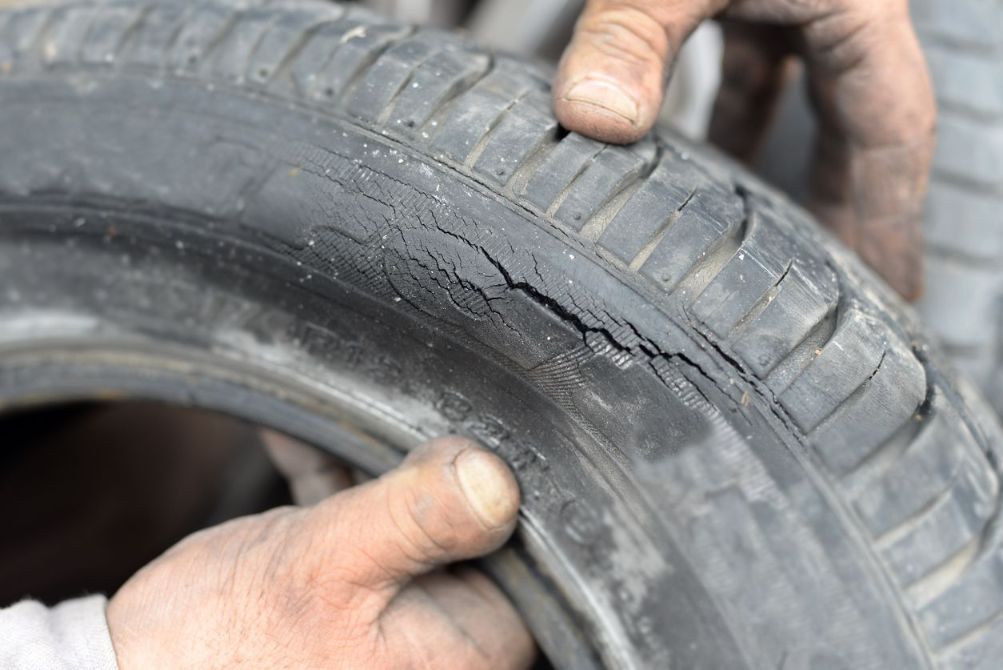
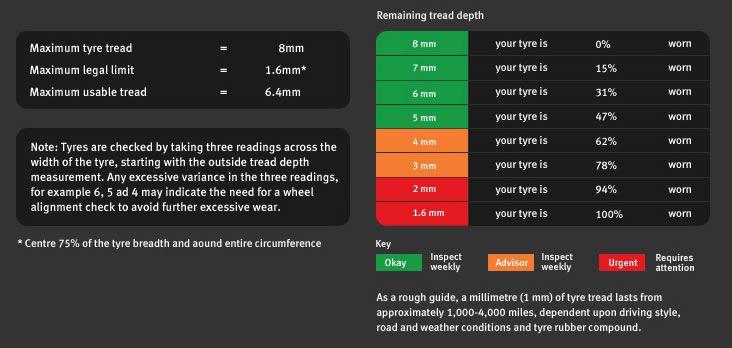
Tyre damage detection is the process of identifying cracks, punctures, bulges, cuts, and tread wear on a vehicle's tyres. Computer vision does this automatically by analysing photos or video of the tyre, replacing the manual visual check.
Tyres are the only part of a vehicle in contact with the road. They determine braking distance, handling, and load stability. Damaged or worn tyres increase crash risk and generate direct cost through premature replacement, roadside failures, and vehicle downtime.
Fleet operators, motor insurers, and vehicle rental companies use AI tyre inspection to check tyre condition at scale, without needing a trained inspector at every vehicle handover.
What We've Learned From Millions of Vehicle Inspections?
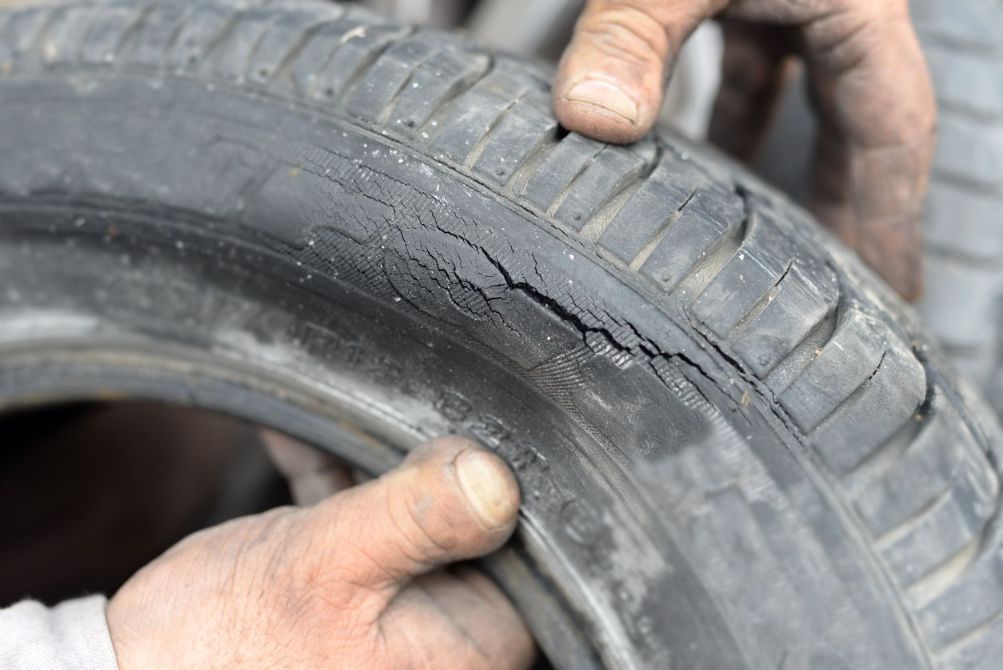
At Inspektlabs, our AI models analyse vehicle inspections across insurance, fleet management, vehicle rentals, and automotive marketplaces. One practical observation is that tyre damage is often missed during manual inspections because inspectors focus primarily on body panels while overlooking tread and sidewall defects. Guided image capture and automated quality validation significantly improve detection consistency compared with unstructured inspections.
What Is Tyre Damage Detection Using Computer Vision?
Tyre damage detection using computer vision analyses images or video of a tyre to identify visible defects automatically. A trained model examines the tread surface, sidewall, and rim edge, classifying any damage it finds by type and severity.
The difference from manual inspection is consistency and coverage. A manual check depends on the inspector's experience, the available light, and how much time they have. A computer vision model applies the same detection criteria to every tyre, in every inspection, regardless of who submitted the images or when.
The input is a standard photo or video capture. The output is a structured record of what was found, where on the tyre it is located, and how severe it is.
• Detect hidden tyre damage
• Improve inspection consistency
• Reduce manual inspection effort
• Enhance fleet safety and efficiency
Why Does Tyre Health Matter for Safety and Cost?
Tyre condition has a direct safety consequence. According to NHTSA data, approximately 11,000 tyre-related crashes occur in the United States every year. Improper air pressure, punctures, and road hazards are among the leading causes. A tyre that fails at speed removes the driver's control of the vehicle with no warning.
For fleet operators, the cost implications compound. A tyre that fails on the road creates unplanned downtime, roadside assistance costs, and potential cargo delays. A tyre replaced too early wastes remaining usable life. Both errors are expensive at fleet scale, and both are the result of inspection data that is either missing or unreliable.
Correctly maintained tyres also improve fuel efficiency and extend usable tyre life, though the exact saving varies significantly by vehicle type, load, and driving conditions.
For insurers, tyre condition is a risk exposure factor. A vehicle presented for a claim with badly worn tyres raises questions about the cause of the incident and the policyholder's maintenance record. Documented tyre condition at policy inception provides the baseline needed to assess that fairly.
While AI can quickly identify visible tyre damage, it should complement regular tyre maintenance rather than replace it. Fleet operators and vehicle owners should continue following the tyre inspection and maintenance recommendations provided by vehicle manufacturers and applicable road safety authorities. AI inspection helps document tyre condition consistently, while decisions on tyre repair or replacement should always align with manufacturer guidelines and local safety regulations.
Why Do Tyres Wear Unevenly?
Uneven tyre wear is a symptom, not a cause. Understanding what produces it explains why visual tyre inspection reveals more than just tyre condition.
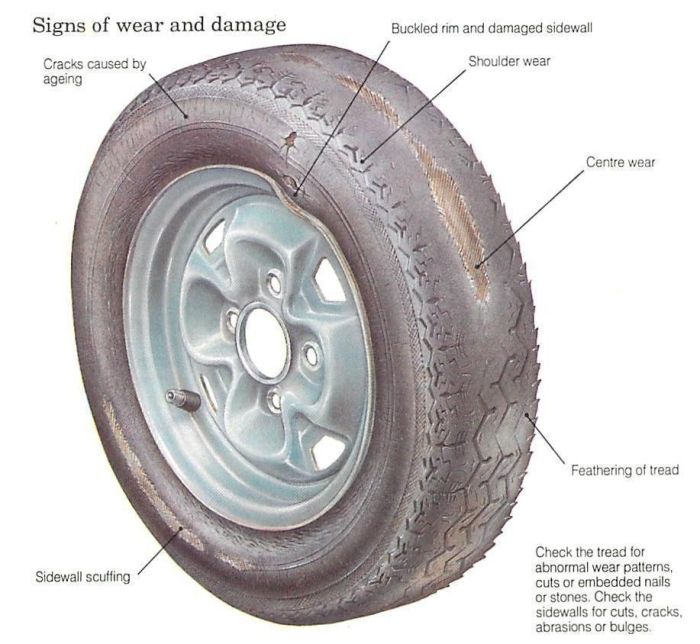
Wheel misalignment: When the wheels are not aligned to the manufacturer's specification, the tyre does not sit flat against the road surface. This produces wear concentrated on the inner or outer shoulder of the tread rather than evenly across it. Camber, toe, and caster misalignment each produce a distinct wear pattern.
Improper inflation: An under-inflated tyre bulges at the sides, causing wear on both outer edges while the centre tread remains relatively intact. An over-inflated tyre does the opposite, wearing the centre of the tread while the shoulders stay fresh. Both patterns are visually identifiable.
Suspension problems: Worn shocks, struts, or bushings allow the wheel to move vertically in an uncontrolled way. This produces cupping or scalloping: a repeating pattern of high and low wear around the tyre circumference.
Driving patterns and load: Aggressive cornering wears the shoulders. Heavy braking wears flat spots into the tread. Consistently carrying loads above the vehicle's rated capacity accelerates wear across the whole tyre and increases sidewall stress.
This is why tyre inspection has diagnostic value beyond the tyre itself. A wear pattern indicating misalignment or suspension wear tells a fleet manager that the vehicle needs attention beyond a tyre replacement.
What Types of Tyre Damage Can AI Detect?
Tyre damage falls into distinct categories, each with a recognisable visual pattern and a different level of urgency. Not every tyre defect requires the same response. While some conditions require immediate replacement, others can be monitored or repaired depending on their severity and location. These damage categories also form part of the broader vehicle damage types list used in full vehicle condition assessment.
The table below summarises the most common types of tyre damage, how they typically appear, their relative risk, and the recommended course of action.
Severity classification matters in practice. A bulge and shallow tread wear both qualify as tyre damage, but they require different responses. One may require the vehicle to be taken off the road immediately, while the other can be addressed during scheduled maintenance. AI helps classify these conditions consistently rather than relying solely on individual judgment.
How Does an AI Tyre Inspection System Work?
An AI tyre inspection system follows five steps from capture to report. The AI-powered damage detection platform handles each stage automatically.
- Image capture: The operator photographs or films the tyre using a standard smartphone camera. Tyre inspection using a smartphone camera requires no specialist equipment, no tread depth gauge, and no fixed hardware installation. A guided capture flow prompts the correct angles, covering the tread surface, both sidewalls where visible, and the rim edge.
- Preprocessing: The submitted media is checked and prepared before analysis. Image quality validation rejects captures that are too dark, too blurred, or taken from too far away. Preprocessing also reduces noise and normalises lighting variation so the detection model works consistently across different capture conditions.
- Computer vision model detection: The trained model analyses the prepared images, identifying regions of the tyre that show damage. Detection covers the tread surface, sidewall, and shoulder areas. The model distinguishes actual damage from the normal features of a tyre such as tread grooves, sipes, and moulding marks.
- Damage classification: Each detected finding is classified by damage type and assigned a severity level. Classification determines whether the finding requires immediate action, scheduled attention, or monitoring at the next inspection.
- Report generation: A structured condition report is produced automatically, documenting every finding by type, location on the tyre, and severity. The report integrates with fleet management, claims, or rental systems via API.
The device compatibility matters for scale. Because AI vehicle inspection software tyre detection works from standard mobile camera captures, a fleet operator can deploy it across hundreds of vehicles and multiple locations without installing hardware at any of them. Every driver already carries the required equipment.
Is This the Same as Tyre Manufacturing Inspection?
No. AI tyre damage detection focuses on in-service wear, while manufacturing inspection focuses on production defects.
Manufacturing quality control operates on a production line, using specialist hardware such as X-ray, shearography, or laser scanning to identify internal defects in newly produced tyres before they ship. It examines belt placement, ply alignment, and internal voids that are invisible from the outside.
In-service damage assessment examines tyres already fitted to vehicles in operation. It identifies wear, cuts, cracks, and impact damage accumulated through use, from images captured in the field with standard equipment. The two use cases share the term computer vision but have different inputs, different hardware, and different questions to answer.
Where Is Automated Tyre Damage Detection Used?
Automated tyre inspection is deployed across four vehicle-intensive industries.
- Insurance: Tyre condition is documented at policy inception and at claim submission. This supports claims validation by establishing whether tyre condition contributed to an incident and whether the damage is new or pre-existing.
- Fleet management: Regular tyre checks at shift handover identify wear before it becomes a roadside failure. Wear pattern analysis also flags alignment and suspension issues early, supporting preventive maintenance rather than reactive repair.
- Car rental: Tyre condition forms part of the check-in and check-out inspection record. This establishes whether tyre damage occurred during a specific rental period and supports fair damage attribution at return.
- Auctions and remarketing: Tyre condition is a component of the standardised vehicle condition report that buyers rely on. Documented tyre condition supports accurate pricing and reduces post-sale disputes.
For fleet operators specifically, tyre condition data becomes most valuable when it is tracked across time rather than assessed at a single point. Automated incremental damage tracking compares each inspection against the previous record for the same vehicle, flagging any change in tyre condition and attributing it to the relevant period.
Challenges in Tyre Damage Detection
AI reduces these challenges. It does not remove them entirely.
- Differentiating tread damage from sidewall damage requires the model to correctly identify which part of the tyre it is examining. The two areas have different repairability rules, so misclassification affects the recommended action.
- Small cracks are difficult to locate in zoomed-out images. When the capture distance is too great, fine cracking on the sidewall falls below the resolution needed for reliable detection.
- Tyre grooves can be flagged as cracks. The normal tread pattern of a tyre includes deep linear features that share visual characteristics with damage. Models require specific training to distinguish designed grooves from actual cracking.
- Shadows and surface marks produce false positives. The rubber hairs present on new tyres, watermarks on the tread, and shadows cast across the tyre surface can all appear as damage in a two-dimensional image.
Guided capture protocols and automated image quality validation address the most common of these problems at the point of submission, rather than leaving them to be discovered during assessment.
Benefits of AI-Based Tyre Inspection
Faster inspection: AI-based tyre inspection reduces manual inspection effort by automatically analysing images immediately after capture, allowing fleet operators to review tyre condition within minutes instead of manually documenting every wheel.
Consistent classification: The same criteria apply to every tyre, in every inspection. Two vehicles with identical tyre condition receive identical assessments regardless of location, time, or who performed the capture.
Reduced human error: Manual tyre checks under time pressure miss damage, particularly on the inner sidewall and areas not directly visible from a standing position. Structured capture prompts ensure those areas are documented.
Scalable auditing: A fleet operator can audit tyre condition across an entire vehicle population without deploying inspectors to each location. The audit produces comparable data across every vehicle, which is what makes trend analysis possible.
Cost control: Accurate condition data supports replacing tyres at the right point rather than too early or after a failure. Both errors are expensive; consistent inspection data reduces both.
Key Takeaways
- AI-powered tyre inspection detects visible tyre damage from standard photos or videos, including cracks, bulges, cuts, punctures, tread wear, and embedded objects.
- Most AI tyre inspection systems work with a standard smartphone camera, eliminating the need for specialist hardware or fixed inspection setups.
- AI classifies tyre damage by type and severity, helping maintenance teams prioritise immediate repairs, scheduled maintenance, or continued monitoring.
- Uneven tyre wear can indicate underlying issues such as wheel misalignment, incorrect tyre pressure, or suspension problems, making tyre inspection valuable beyond identifying tyre damage alone.
- AI tyre inspection supports consistent and scalable inspections across insurance, fleet management, vehicle rentals, and automotive remarketing operations.
- AI detects visible tyre damage but should complement regular tyre maintenance and professional inspections, especially where internal tyre defects are suspected.
Tyres are the component most directly responsible for vehicle safety and among the most frequently overlooked in routine inspection. Manual checks are inconsistent, time-consuming at scale, and dependent on the inspector examining areas that are not easy to see.
Computer vision-based tyre damage detection addresses this by producing consistent, documented assessments from standard smartphone captures. It identifies cracks, bulges, cuts, embedded objects, and wear patterns, classifies each by severity, and generates a structured report that integrates with existing operational systems.
The technology has real limitations, particularly around image quality and distinguishing designed tyre features from actual damage. Guided capture and quality validation address most of these at the point of submission. For fleet, insurance, rental, and remarketing operations managing vehicles at scale, AI tyre inspection produces the consistent condition data that manual processes cannot deliver reliably.
Frequently Asked Questions
What is tyre damage detection using AI?
Tyre damage detection using AI uses computer vision to analyse photos or videos of a tyre and identify visible defects such as cracks, bulges, cuts, punctures, tread wear, and embedded objects. The system classifies each type of damage by its severity and generates a structured inspection report, helping businesses perform faster and more consistent tyre inspections.
What types of tyre damage can AI detect?
AI can detect a wide range of visible tyre defects, including sidewall cracks, bulges, tread wear, cuts, punctures, embedded objects, flat tyres, and uneven wear patterns such as cupping or scalloping. It can also help identify wear patterns that may indicate underlying issues like wheel misalignment or suspension problems.
Do I need special equipment for AI tyre inspection?
No. Most AI tyre inspection solutions work with photos or videos captured using a standard smartphone camera. No specialist cameras, tread depth gauges, or fixed inspection hardware are required, making it easier to inspect vehicles across multiple locations using existing mobile devices.
How accurate is AI at detecting tyre damage?
AI can detect visible tyre damage with high accuracy when images are captured under suitable conditions. Factors such as adequate lighting, the correct camera angle, image clarity, and complete coverage of the tyre all contribute to reliable detection. Many AI inspection systems also include image quality validation to ensure the submitted photos meet the requirements for accurate analysis.
Can AI detect all types of tyre damage?
AI is designed to detect visible tyre damage that appears in photos or videos, such as cracks, cuts, bulges, punctures, and tread wear. However, it cannot identify internal structural defects or damage that is not visible on the tyre surface. In such cases, specialised inspection methods and professional assessment may still be required.
How often should tyres be inspected?
The recommended inspection frequency depends on how the vehicle is used. Commercial fleets often inspect tyres during routine vehicle checks or at shift handovers, while rental vehicles are typically inspected before and after each rental. For private vehicles, a monthly visual inspection and a tyre check during regular servicing are generally recommended to help identify wear or damage early.