5 Cost-Saving Tips for Motor Insurance Companies in 2025
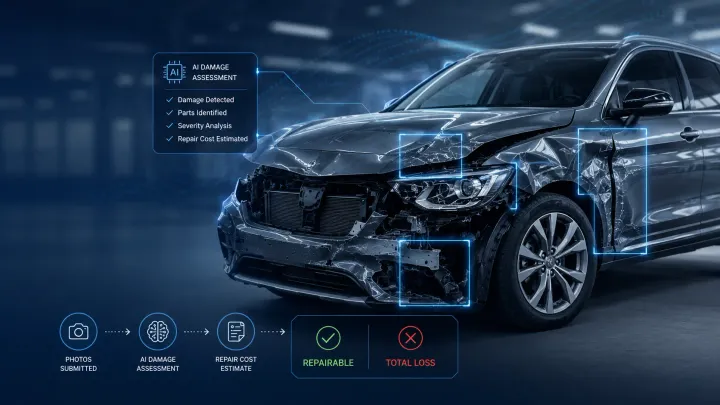
In this blog, we will talk about the different steps that can be automated using AI which will help Motor Insurance companies reduce operational costs while also improving process efficiency and customer satisfaction.

Motor insurance companies are constantly seeking innovative ways to reduce operational costs while improving efficiency and customer satisfaction. One of the most effective strategies in 2025 is to leverage AI for motor insurance and automation to streamline workflows and eliminate inefficiencies.
In this blog, we’ll explore five key areas where adopting AI-powered vehicle inspection solutions and other claims tech innovations can lead to major cost savings without compromising on quality.
Optimize Car Insurance Inspections with AI
Underwriting Inspections
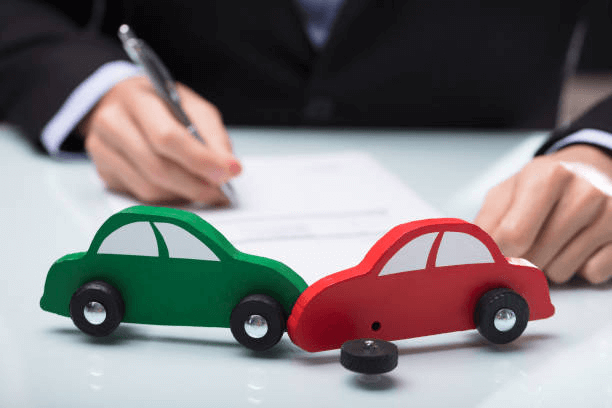
The car insurance inspection process, particularly during underwriting, is critical for assessing risk before issuing a policy. This helps insurers detect pre-existing damages, especially in fraud-prone markets like Southeast Asia and South America.
However, traditional manual inspections are expensive (up to $300 per vehicle in developed countries), time-consuming, and not scalable. Many insurers are replacing these manual processes with AI in motor insurance inspection, enabling faster risk assessment, consistent damage evaluation, and lower inspection costs before policy issuance.
With AI-powered vehicle inspection solutions like Inspektlabs, insurers can
- Enable low-cost self-inspections via smartphones
- Automatically detect pre-existing damage
- Identify fraud attempts like hiding damage or switching vehicles.
This significantly reduces inspection costs while improving fraud detection accuracy, making it a smart, scalable alternative to manual inspections.
Automated FNOL decision-making
The First Notice of Loss (FNOL) stage is often prone to delays and manual errors. In fact
- 60% of FNOL forms contain mistakes or illegible handwriting
- These errors contribute to nearly $3 billion in annual industry losses.
By integrating car insurance AI at the FNOL stage, insurers can
- Instantly assess damage through uploaded photos or videos
- Decide whether the vehicle should go to a repair shop, salvage yard, or smart repair facility
- Reduce delays and incorrect routing
Faster and more transparent FNOL workflows not only reduce operational costs but also help build customer trust by keeping policyholders informed and shortening the time between reporting an incident and receiving a claim decision.
For Motor Insurers
Stop FNOL errors before they cost you
AI assesses damage instantly and routes claims correctly, with no illegible forms slowing you down.
Improve Repair Estimation Accuracy
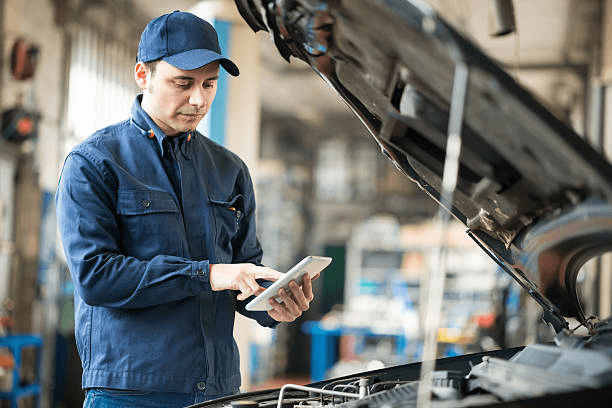
Repair cost estimation is highly variable and subjective, especially for minor external damage. Relying solely on human estimators can lead to inconsistent quotes and inflated payouts.
Claims tech platforms by AI help insurers
- Compare repair costs across networks
- Recommend the most economical and reliable repair option
- Enable Straight-through processing for low-value claims like dents, scratches, and windshield damage, automating the claims journey end-to-end
By reducing human involvement in smaller claims (which represent 15%-20% of total claims), insurers lower operational costs and speed up claim settlement times.
Standardize claim review with insurance claims AI
Large claims involving internal or structural damage still require human inspection. However, inconsistencies in manual assessments can lead to overpayments and disputes.
Using Insurance Claims AI:
- Inspectors can cross-verify reports with AI-generated images
- Insurers benefit from an additional, unbiased layer of validation
- Error rates and estimate discrepancies are significantly reduced
This improves accuracy and consistency while minimizing financial risk from subjective evaluations.
Streamline Subrogation

Subrogation is the process of recovering costs from the at-fault party’s insurer, which often involves extensive manual effort and evidence validation. This makes it both time-intensive and susceptible to fraud.
AI can revolutionize subrogation by:
- Automatically analyzing evidence to determine liability
- Detecting signs of tampering or fake documentation
- Accelerating case resolutions by reducing human dependency
By leveraging AI here, insurance companies reduce the chances of eror and fraud while improving recovery timelines and success rates.
Conclusion
By leveraging AI for motor insurance across key processes like Underwriting Inspections, FNOL decision-making, repair estimation, claim review, and subrogation, motor insurance companies can achieve significant cost savings while improving efficiency and customer satisfaction. These technologies not only reduce manual errors and fraud but also streamline operations, enabling insurers to make faster, data-driven decisions. Beyond lowering costs, AI also helps insurers build customer trust by making claims, inspections, and policy decisions more transparent and consistent.
As the industry moves towards a more digitized future, insurers are also preparing for the next wave of motor insurance innovations, making AI-powered solutions crucial for staying competitive in 2025 and beyond. Insurers that adopt these innovations early will not only cut operational costs but also enhance their ability to deliver seamless, transparent, and customer-friendly services - ultimately driving growth and profitability.
If you'd like to explore how Inspekltabs can help your insurance business save money in 2025, contact us now. From car insurance inspections and FNOL to subrogation, embracing car insurance AI and automation in 2025 is no longer optional, it’s a competitive necessity.
By investing in robust vehicle inspection solutions and other claims tech platforms, insurers can
- Cut inspection and claims processing costs
- Eliminate manual errors
- Detect fraud earlier
- Enhance customer satisfaction through faster turnaround times
Insurers that adopt insurance claims AI early will gain a significant edge in operational efficiency, customer retention, and overall profitability.
Frequently Asked Questions
1. How can AI help motor insurance companies reduce operational costs?
AI can reduce operational costs by automating repetitive work such as vehicle inspections, damage assessment, claim review, and repair estimation. AI-powered insurance claims software can process routine cases faster and reduce the amount of manual effort required from claims teams.
2. How can insurers automate pre-insurance vehicle inspections?
Insurers can use AI vehicle inspection software to let customers or field teams capture vehicle photos or videos before coverage begins. The system can assess visible damage and create a digital condition record, giving insurers a consistent baseline for underwriting and future claims.
3. How can insurers automate FNOL for motor insurance claims?
Insurers can enable customers to submit FNOL through a smartphone by capturing photos or videos of the damaged vehicle. An AI vehicle inspection system can analyze the submitted media, identify visible damage, and structure the information for the next stage of claim processing.
4. How can insurers automate vehicle damage assessment and repair estimation?
AI can analyze vehicle photos or videos to identify damaged parts, classify damage, and support repair-cost estimation. Inspektlabs combines AI-based damage detection with repair estimation capabilities, helping insurers move from visual evidence to a structured claim assessment with less manual intervention.
5. How can AI support straight-through processing for motor insurance claims?
AI can support straight-through processing by automating routine steps such as image validation, vehicle damage assessment, claim classification, and repair estimation. This allows straightforward claims to move through predefined workflows with minimal manual handling while claims teams focus on cases that require more attention.