AI in Auto Insurance: Building Customer Trust Through Transparency and Speed
At a time when insurers are losing customer trust due to increasing policy prices and slow processes, AI can be the solution to win back lost customers. Read on to find out!
AI in auto insurance refers to the application of machine learning, computer vision, and decision automation across the insurance lifecycle: from underwriting and pricing to claims assessment and fraud detection. The goal is to make insurance faster, more consistent, and more transparent for the customer.
The need for that improvement is documented. The J.D. Power 2024 U.S. Auto Insurance Study found that 51% of auto insurance customers have low trust in their insurer. Among high-trust customers, 90% say they will renew their policy. Among low-trust customers, that figure drops to 30%. Trust is not a soft metric. It is a direct driver of retention.
This article covers why trust is falling, what trust actually consists of in an insurance context, how AI addresses each component, where it falls short, and how Inspektlabs' platform applies these principles across a set of insurance-specific AI agents.
Why customer trust is falling in the Auto Insurance industry
Customer trust in auto insurance has been declining across major markets. Surveys by PwC and Deloitte both document dissatisfaction tied to complex policies, slow claims handling, and opaque processes.
The main drivers of the decline are consistent across markets.
- Rising premiums without clear explanation: US auto insurance rates rose 11.2% on average in 2024. Customers who cannot see a clear connection between their circumstances and their premium feel the increase is arbitrary.
- Slow and confusing claims processes: Long wait times and repetitive paperwork damage confidence at exactly the moment the insurer is supposed to demonstrate its value.
- Opaque pricing practices: Practices like "price walking", where loyal customers face hidden rate increases while new customers get discounts, have undermined trust. The UK Financial Conduct Authority banned the practice in 2022 after widespread consumer complaints. The original documentation of this practice from Advisense can be found here.
- AI skepticism: Customers want speed but are wary of opaque automated decisions. When they cannot understand how a premium was set or a claim was assessed, trust erodes further.
What Does 'Trust' Actually Mean in Auto Insurance?
Trust in insurance breaks down into five distinct components, each of which can be present or absent independently.
1. Transparency: The customer understands how their premium was calculated, how their claim is being assessed, and why a decision was reached. Black-box outcomes, however fast, do not build transparency.
2. Fair pricing: Premiums reflect the customer's actual risk profile, not demographic assumptions or loyalty penalties. The customer believes the price is connected to real evidence.
3. Speed: Claims are resolved quickly. Waiting weeks for an outcome damages trust even when the final settlement is fair. Speed signals that the insurer takes the customer's situation seriously.
4. Consistency: The same claim submitted by two different customers with identical circumstances should produce the same outcome. Inconsistency creates the perception of bias, even when none is intended.
5. Human empathy: Customers dealing with the aftermath of an accident are stressed. Access to a human who understands their situation, particularly for complex or distressing cases, remains an important trust signal even in a digital-first process.
AI in auto insurance can improve all five of these components when it is deployed thoughtfully. It can also damage them if transparency and oversight are not built in from the start.
How Does AI Improve Customer Trust in Auto Insurance?
AI does not build trust simply by existing. It builds trust when it makes the insurance experience faster, more transparent, more consistent, and more honest about its own limitations. The sections below cover each mechanism.
Does AI Make Auto Insurance Pricing More Transparent?
AI-driven underwriting analyses verifiable data: vehicle condition from inspection reports, telematics driving data, claims history, and vehicle risk profiles. Each input is traceable. A premium calculation based on this evidence is more explainable to the customer than one based on demographic assumptions or historical pricing tables.
That explainability matters to customers. A J.D. Power study on customer attitudes toward AI in insurance (2025) found that only 15% of customers believe insurers should use AI without restriction in pricing. A further 33% say AI use should be limited until insurers can ensure it does not introduce bias or violate ethical standards. Customers do not object to AI in pricing as such. They object to pricing that feels arbitrary or unfair. AI that uses verified vehicle condition data as the basis for a premium is a direct response to that concern.
How Does AI Speed Up Insurance Claims Without Losing Fairness?
Manual claims processing depends on adjuster availability. Scheduling a field visit, processing the report, and routing the claim through internal review can take 10 to 30 days. AI assessment of submitted photos and video produces a structured damage report in minutes.
The J.D. Power 2024 U.S. Auto Claims Satisfaction Study found that 80% of customers who have a poor claims experience have left or plan to leave their insurer. Claims speed is not a convenience metric. It is a retention factor.
Speed without fairness destroys trust faster than slowness. AI-generated claim assessments need to be built on consistent detection criteria and be reviewable by a human. The appropriate model is: AI handles the assessment and evidence structuring; a human confirms or adjusts before final settlement for anything above a defined complexity threshold.
Are AI Insurance Decisions Consistent and Free of Bias?
Consistency is one of AI's genuine advantages over manual review. The same damage submitted twice, by different customers at different times, should produce the same classification and the same cost estimate. A trained human assessor applying the same criteria on a Monday morning and a Friday afternoon will not always produce identical results.
But consistency does not automatically mean fairness. AI models can encode historical biases from training data and perpetuate them at scale. This is a documented regulatory concern.
In December 2023, the NAIC adopted its Model Bulletin on the Use of Artificial Intelligence by Insurance Companies. As of mid-2025, 24 states had adopted it. The Bulletin requires insurers to ensure that AI decisions comply with all applicable insurance laws and sets governance expectations for how AI is managed. The New York Department of Financial Services has separately issued guidance requiring insurers to test AI models for bias in underwriting and pricing decisions.
For insurers, this means that well-designed AI with documented bias testing and governance is a regulatory compliance requirement, not just a best practice.
What Does a Good Digital Insurance Experience Look Like?
Younger policyholders expect to manage their insurance the same way they manage banking, travel, and healthcare. They expect a mobile-first digital interface. Filing a claim by calling a helpline and waiting for a paper form is not a viable customer experience for a significant portion of the market.
A well-designed digital insurance experience includes self-serve claim submission via smartphone, guided photo capture that walks the customer through what to document, immediate acknowledgement that the submission was received, real-time status updates as the claim progresses, and clear, written explanations of any decision reached. None of these require AI. But AI enables faster responses at each step and removes the dependency on human availability for routine processing.
Can AI Detect Insurance Fraud While Protecting Honest Customers?
Motor insurance fraud adds cost to the system that honest customers ultimately pay through higher premiums. AI fraud detection that identifies manipulated images, pre-existing damage concealed during inspection, and anomalous claim patterns directly supports honest customers by preventing the fraud leakage that inflates premiums.
The important qualification is that fraud detection must not produce false positives that delay or deny legitimate claims. An AI system that flags a valid claim as suspicious, without a clear and reviewable reason, damages the trust of the very customers the system is supposed to protect. False positives must be reviewable by a human, and the customer must be able to understand and challenge the flag.
Why Human Oversight Still Matters in AI-Driven Insurance
Full automation is the right answer for a defined subset of straightforward, low-complexity cases. It is not the right answer for all insurance decisions.
The NIST AI Risk Management Framework (AI RMF 1.0, 2023) establishes trustworthiness in AI systems through explainability, fairness, and human oversight as foundational requirements. For insurance, this translates directly: complex claims, disputed outcomes, and high-value decisions should involve human review, with AI providing the structured evidence and assessment rather than the final word. This balance reassures customers that they are engaging with a fair, accountable process.
What Are the Risks and Limitations of AI in Insurance?
An honest account of AI in auto insurance has to include its genuine limitations. The following risks are real, documented, and worth understanding before deployment.
Explainability gaps: Many AI models, particularly deep learning models used for damage classification, produce outputs that are difficult to explain in plain language. A customer who is told their claim was partially declined based on an AI assessment deserves a readable explanation. Systems without explainability features cannot provide this, which creates a direct conflict with both customer expectations and emerging regulation.
Data privacy risks: AI systems require data to function. In insurance, that means vehicle condition records, telematics data, driver history, and in some cases biometric or location data. Every data type collected creates a privacy obligation. In the EU and UK, GDPR governs how this data is processed and stored. Customers have the right to know what data is used and why. Non-compliance carries significant regulatory risk.
Model bias: AI models trained on historical insurance data can inherit the biases present in that data. If certain demographic groups historically received worse outcomes, a model trained on those outcomes may perpetuate the pattern. The NAIC's regulatory guidance and state-level requirements for bias testing exist specifically because this is a documented, not a theoretical, problem.
Customer skepticism: As noted, only 15% of customers favour unrestricted AI use in pricing. Deploying AI without transparency mechanisms and human review does not build trust. It undermines it. The technology is only as valuable as the trust the customer has in how it is being used.
How Inspektlabs' AI Agents Build Trust at Every Step
Inspektlabs has built a set of AI agents designed to address the specific trust failure points in the insurance claims and inspection lifecycle. Each agent handles a defined stage of the process.
1. Damage Detection Agent

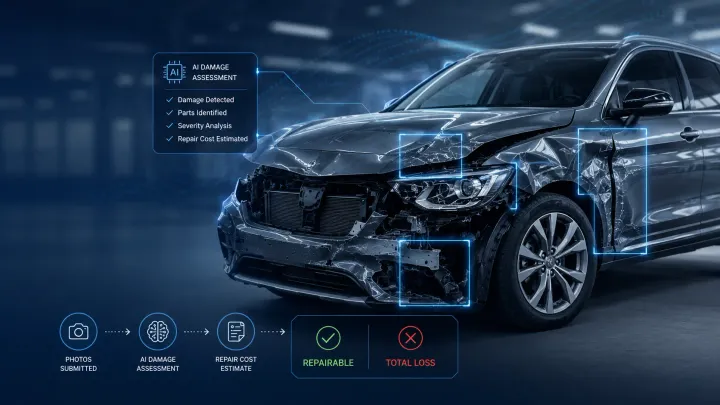
The damage detection agent forms the core of the system. It identifies and classifies vehicle damage from submitted photos and video, achieving 90 to 95% accuracy across damage types. For more on the detection methodology, see the AI car damage detection methodology post.
Scenario: A policyholder photographs their vehicle after a car park impact. They submit four images through the guided capture flow. The damage detection agent identifies a deep dent on the rear quarter panel, a scratch on the bumper, and a cracked tail light. Each finding is classified by type, location, and severity. The output is a structured report, not a subjective description.
2. Underwriting Agent
The underwriting agent assesses risk at the point of policy issuance or renewal. It evaluates the vehicle's condition from the inspection record, the customer's claim history, and the vehicle type to support more accurate premium calculation. Pricing anchored to verified evidence is more explainable to the customer and harder to dispute. For the cost estimation component, see automated claim estimation.
3. FNOL Agent

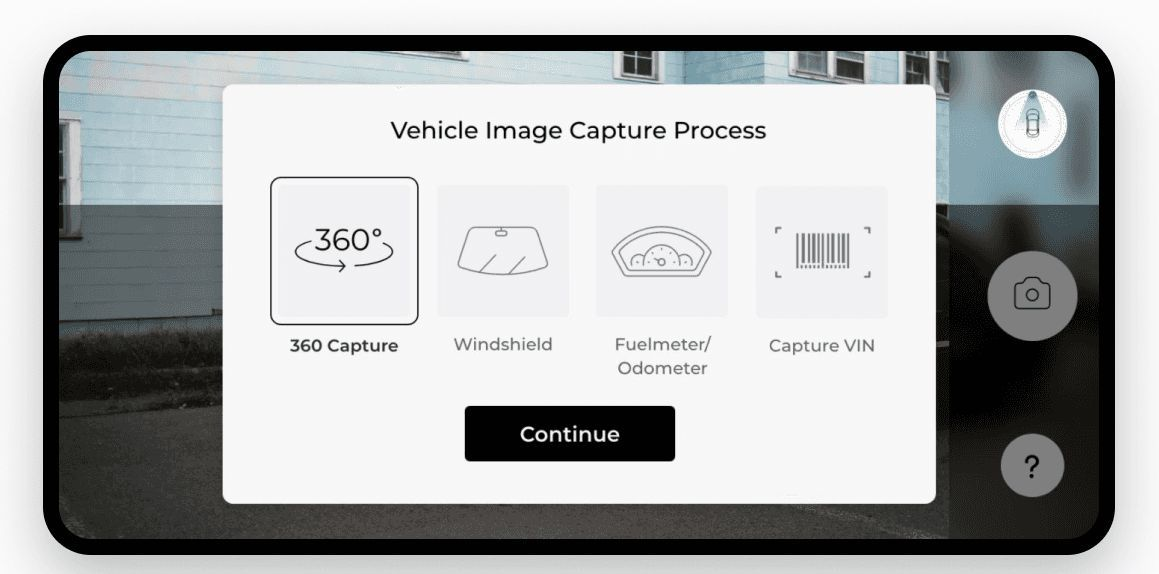
The FNOL agent enables remote claims intake. When an incident occurs, the policyholder submits photos and video through the guided capture flow. The agent validates the submission quality, identifies the visible damage, and shares the structured output with the insurer automatically. Repair vs. replace decisions are generated as part of the same process. For a detailed breakdown of how this works, see the FNOL use cases blog post.
Scenario: A driver is involved in a rear-end collision. Rather than waiting for a field adjuster, they open the Inspektlabs app, receive a guided prompt to photograph the damage from required angles, and submit. The FNOL agent validates the images, runs the damage assessment, and routes a structured claim file to the insurer's system within minutes. The driver receives an acknowledgement immediately.
4. Claim Estimation and Review Agent
Inconsistent claim estimates are one of the most common sources of customer disputes. When the same damage is assessed differently depending on which adjuster handles the file, customers feel the process is arbitrary. The claim estimation agent applies standardised cost logic to every submission. The estimate is traceable to the specific damage findings and the applicable repair rates. Customers receive a documented breakdown, not a number without explanation.
5. Fraud Detection Agent
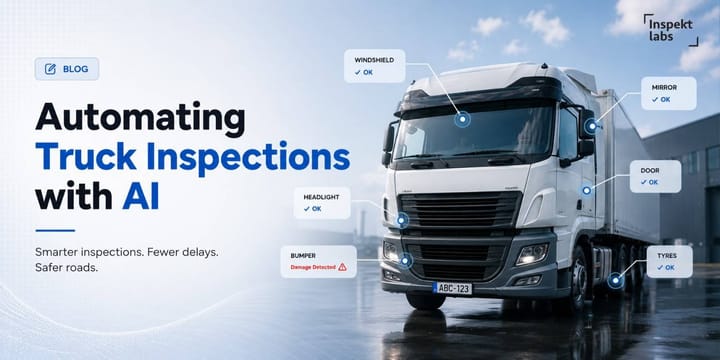
The fraud detection agent examines photo metadata, capture patterns, and historical damage records to identify suspicious submissions. It flags reused images, attempts to submit pre-existing damage as new, and inconsistencies between the stated incident and the visual evidence. For more on the fraud detection methodology, see the fraud detection blog post.
6. Subrogation Agent
The subrogation agent scans claim files to identify cases where the insurer has a right to recover costs from a third party. It uses computer vision and natural language processing to assess liability signals and flag eligible cases automatically. This reduces the administrative overhead of subrogation and ensures cases that should be pursued are not missed in high-volume processing environments.
Is AI in Auto Insurance Legitimate and Trustworthy?
Yes. It is already the industry standard, not an emerging experiment. The NAIC's 2022 Private Passenger Auto AI/ML Survey found that 88% of auto insurers use, plan to use, or are actively exploring AI and machine learning. The technology is not fringe. It is operational across the major carriers.
The regulatory framework around AI in insurance is also maturing. The NAIC adopted its AI Model Bulletin in December 2023, establishing expectations for governance, bias testing, and compliance. 24 states had adopted it by mid-2025. State regulators in New York and others have issued additional guidance on bias auditing for AI underwriting and pricing models.
What matters now is whether the insurer using AI has the governance, transparency, and oversight to use it responsibly.
Inspektlabs' platform is built on documented detection methodology: see the core AI inspection technology page for the technical detail.
What Is Next for Trust in AI-Powered Insurance?
- Personalised coverage: With real-time insights from vehicle inspections and driving data, insurers can offer policies tailored to individual risk profiles rather than demographic averages.
- Continuous risk monitoring: Inspection for car insurance will increasingly become ongoing rather than one-time, with AI tracking vehicle condition regularly to ensure pricing stays connected to actual risk.
- Regulatory pressure on explainability: As AI adoption grows, regulators are increasingly requiring that automated decisions be explainable to consumers and auditable by regulators. Insurers that build explainability into their systems now will be better positioned than those who retrofit it under regulatory pressure.
- Inspection apps as standard: Guided vehicle capture via a smartphone app, for both pre-policy inspection and FNOL reporting, is moving from a competitive differentiator to an expected capability.
The future of AI in insurance will be judged on accountability as much as efficiency. For more on how claims technology is evolving to support this, see how AI claims technology is changing the settlement process.
Key Takeaways
- 51% of auto insurance customers have low trust in their insurer (J.D. Power 2024). Trust is the single biggest driver of renewal intent.
- Trust in insurance consists of five components: transparency, fair pricing, speed, consistency, and human empathy. AI can improve all five when deployed with appropriate oversight.
- 88% of auto insurers use or plan to use AI (NAIC 2022). AI in auto insurance is already the industry standard.
- Only 15% of customers favour unrestricted AI in pricing (J.D. Power 2025). Governance, explainability, and human review are not optional extras. They are what customers require.
- An honest limitations section matters: model bias, explainability gaps, and data privacy risks are real and need to be managed, not minimised.
- Inspektlabs provides six AI agents that address trust failure points across damage detection, underwriting, FNOL, claim estimation, fraud detection, and subrogation.
The auto insurance industry faces a measurable trust deficit. Premiums are rising, claims processes are slow, and customers feel decisions are opaque. AI in auto insurance offers a direct response to each of these problems when it is deployed with transparency, governance, and appropriate human oversight.
Faster claims, evidence-based pricing, consistent damage assessment, and built-in fraud detection are not just operational improvements. They are the components of an insurance experience that customers actually trust. The regulatory framework is moving in the same direction, requiring explainability and bias testing as standard practice.
Inspektlabs' AI agents are built specifically to address these trust failure points across the inspection and claims lifecycle. If you want to see how this works in practice, contact the team for a walkthrough.
Frequently Asked Questions
Is AI in auto insurance legitimate?
Yes. 88% of auto insurers use, plan to use, or are actively exploring AI, according to the NAIC's 2022 survey of 193 auto insurance companies. The NAIC adopted a formal AI Model Bulletin in December 2023, and 24 states have adopted it as of mid-2025. AI in auto insurance is regulated, mainstream, and growing.
How does AI improve customer trust in insurance?
AI improves trust through faster claims resolution, evidence-based pricing that customers can understand, consistent damage assessments that do not vary by assessor, and fraud detection that protects honest customers from the premium increases that fraud causes. Trusted AI in insurance combines these capabilities with human oversight and clear explanations of how decisions are reached.
Which solutions in claims and pricing are recognised for earning customer trust?
Solutions that combine AI-powered damage detection with human review for complex decisions, documented bias testing, transparent pricing logic, and fast FNOL processing consistently perform better on trust metrics. Inspektlabs' platform covers all of these: damage detection, fraud screening, claim estimation, and FNOL automation, built around a documented AI methodology.
Do customers trust AI to price their insurance?
Most do not yet. A J.D. Power study (2025) found that only 15% of customers favour fully unrestricted AI use in pricing, while 33% want it limited until bias concerns are addressed. Customers are open to AI-assisted pricing when it is explainable, tested for fairness, and subject to regulatory compliance.
Can AI reduce insurance fraud without hurting honest customers?
Yes, when it is designed correctly. AI fraud detection that identifies manipulated images, pre-existing damage, and anomalous claim patterns reduces the fraud costs that raise premiums for honest customers. The essential safeguard is a clear review process for flagged claims, so that legitimate submissions with unusual characteristics can be escalated to a human rather than automatically declined.
Is human oversight still needed with AI-driven insurance decisions?
Yes. The NIST AI Risk Management Framework identifies human oversight as a foundational requirement for trustworthy AI systems. In insurance, complex claims, high-value decisions, and disputed outcomes should involve human review. AI provides the structured evidence and assessment. A human makes the final call on anything above a defined complexity threshold.
Can AI insurance decisions be biased?
Yes, and this is a documented regulatory concern. AI models trained on historical insurance data can inherit and perpetuate existing biases, particularly in underwriting and pricing. The NAIC's AI Model Bulletin requires insurers to ensure AI decisions comply with all applicable insurance laws, and several states require bias testing for AI underwriting models. Proper governance, auditing, and diverse training data are the mitigation tools.