
Motorcycle Inspection Software: How AI Is Automating Motorbike Inspections
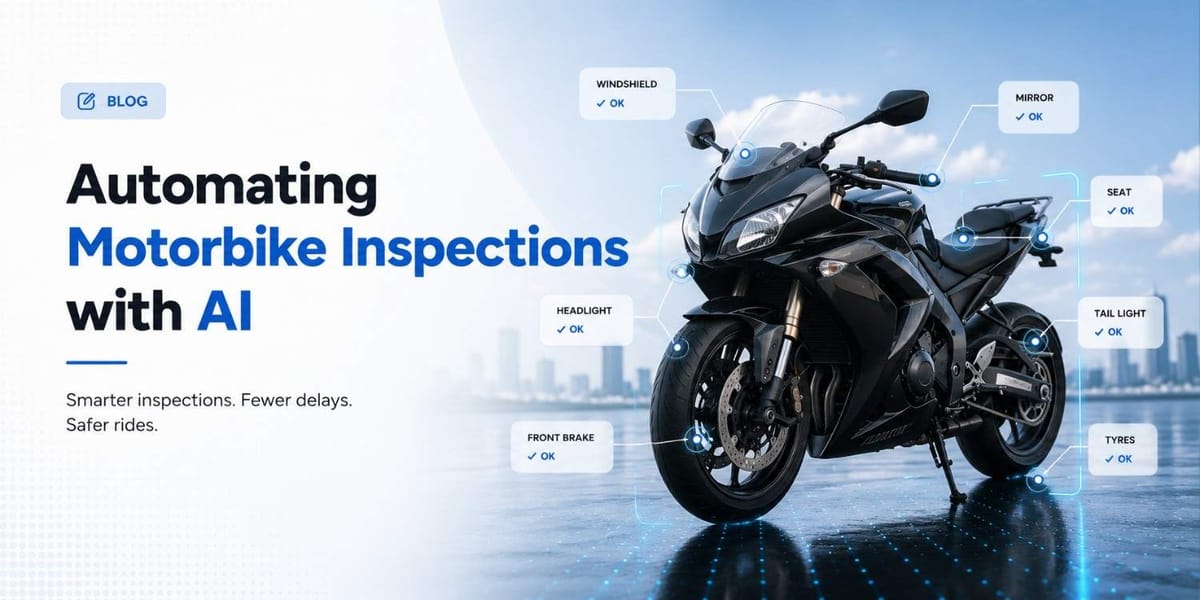
A motorcycle has fewer body panels than a car, but that does not make it easier to inspect.
Damage to critical components like the fairing, fork, or fuel tank can directly impact claim assessment, rental returns, and rider safety. Because motorcycles expose more functional parts, even small issues can be easily overlooked during a quick manual inspection.
Manual motorcycle inspections are often slow and inconsistent. For insurers handling motorcycle insurance inspections, rental companies managing bike fleets, or logistics businesses tracking delivery vehicles, this inconsistency leads to delays, disputes, and operational inefficiencies.
This guide explains what motorcycle inspections involve, where manual processes fall short, and how AI-powered motorcycle inspection is helping businesses reduce inspection time, improve accuracy, and scale operations efficiently.
AI-powered motorcycle inspections use computer vision to analyse photos or videos of a motorcycle and identify visible damage automatically. They help insurers, fleet operators, rental companies, and dealerships inspect motorcycles more consistently, generate digital condition reports, and reduce the time required for manual inspections.
What Are Motorcycle Inspections?
A motorcycle inspection is a structured evaluation of a bike’s physical condition, components, and safety readiness.
It involves checking key parts such as the body panels, engine, tires, brakes, suspension, and visible damage to document the motorcycle’s current state. Motorcycle inspections are commonly used in insurance assessments, rental check-ins and check-outs, and fleet maintenance workflows.
The goal of a motorcycle inspection is to identify damage, detect wear and tear, and ensure that the vehicle is safe and roadworthy.
These inspections cover the main body (fairings, fuel tank, side covers, fenders), lighting (headlights, indicators, brake lights), tyres and wheels, suspension, mirrors, handlebars, exhaust, brake components, and a lot more. For older bikes, the inspection might also flag leaks, corrosion, or visible frame issues.
All the learnings during the inspection process are documented in a condition report. It records what was checked, what was found, and the severity of any issues. That report is what drives insurance decisions, rental handover documentation, and maintenance planning.
AI Inspection Guide
Understand how AI automates vehicle inspections
Learn how AI reduces manual effort and speeds up claims processing.
Why Are Motorcycle Inspections Important?
Motorcycles carry more road risk than most other vehicle types.
According to NHTSA data for 2024, motorcyclists were almost 27 times more likely to meet with a fatal accident per vehicle mile traveled compared to passenger car occupants. In 2024, 6,228 motorcyclists were involved in fatal crashes, accounting for 16% of all US traffic fatalities.
Motorcycles have a much smaller margin for error than cars. A brake fault that results in a minor scrape in a car can cause a serious accident on a bike. That is why pre-ride and pre-policy checks matter more here than in most other vehicle categories.
These inspections also protect businesses that manage bikes at scale. For example, a rental company that does not document the motorcycle’s condition at check-out cannot demand damage costs during return. Or, an insurer without a pre-policy condition record cannot reject claims for pre-existing damage.
Challenges of Manually-Driven Motorcycle Inspections
Manual motorcycle inspection has the same core problems as manual car inspection, plus a few that are specific to bikes.
Motorcycles are compact. Damage to smaller parts like brake levers, turn signals, fairings, and footpegs is easy to miss in a quick walkaround. Checking the underside of a bike requires getting close to the ground. Most routine inspections do not go that far.
Consistency in damage reports is another major issue. What one inspector records as a scuff, another might skip entirely. Two people looking at the same bike on different days will produce different reports. That gap causes disputes later.
Speed is the third constraint. An inspector will take anywhere between 30 minutes to 2 hours for a thorough manual motorcycle inspection. For a rental company managing 50 bikes turning over daily, or an insurer handling hundreds of pre-policy checks each week, that adds up quickly.
Using AI for motorcycle Inspections
AI motorcycle inspection replaces the manual walkaround with a guided digital process. A rider, rental agent, or fleet inspector uses a bike inspection app to capture photos and video of the bike from required angles. That media uploads to the cloud. An AI model analyses it, identifies damage across all major components, and produces a condition report in under two minutes.
No paperwork. No variation based on who is doing the check.
AI vs manual inspection: how they compare
What damage types does AI covers during a motorcycle inspection?
Inspektlabs' motorcycle damage detection covers all the components that matter in an assessment.
- Bodywork and panels: fairings, fuel tank, side covers, front and rear fenders.
- Frame and structural components: visible frame damage and deformation.
- Handlebars and controls: scratches, bends, and visible damage to levers and grips.
- Lights: headlights, indicators, and brake lights.
- Mirrors: presence, damage, and alignment.
- Footpegs and exhaust: visible damage and missing components.
- Tyres and wheels: visible tyre damage, bulging, and rim deformation.
- Seat and rear components: seat condition, rear cowl, and pillion area.
- Windscreen: chips, cracks, and visible damage where fitted.
Each finding is classified by type and severity as part of the motorcycle damage assessment. That output goes directly into the condition report.
How Inspektlabs AI improves motorcycle inspections?
Inspektlabs' AI is trained on over 10 million real-world vehicle images and videos, including a wide range of motorcycles across various markets. Every report is timestamped, tamper-proof, and stored digitally, ensuring you generate fraud-proof reports with 90%+ accuracy every single time.
For businesses that run pre- and post-shift digital motorcycle inspections, incremental damage is tracked between reports. Any change in the bike's condition between two inspection records is flagged and attributed to the relevant rental period or shift with a real-time notification sent to the manager as soon as a new damage is identified. That is what makes dispute resolution and driver accountability work in practice.
AI Inspection Technology
See what AI can detect in vehicle inspections
From damages to part identification, explore real capabilities.
What Parts Does Inspektlabs AI Cover During Motorcycle Inspections?
|
Front Shield |

|
|
License Plate |

|
|
Side view mirror |

|
|
Carrier |

|
|
License plate holder |

|
|
Brake Disc |

|
|
Handles |

|
|
Foot peg |

|
|
Fender |

|
|
Rider Seat |

|
|
Passenger Seat |

|
|
Headlight |

|
|
Tail light |

|
|
Fuel Tank |

|
|
Tyres |

|
|
Rims |

|
|
Suspension |

|
|
Silencer/Exhaust |

|
|
Speedometer/Odometer |

|
|
Indicator |

|
|
Front Brake |

|
|
Clutch Lever |

|
How Inspektlabs AI-Powered Motorcycle Inspections Can Help Your Business
The benefits look different depending on where you sit in the motorcycle ecosystem. Here is how it breaks down by industry.
Insurance companies
Motorcycle insurance inspection is one of the more time-consuming parts of the policy lifecycle. Pre-policy checks for break-in renewals or high-risk profiles typically require a field inspector visit. That takes days to arrange and complete.
With AI-powered motorcycle inspection, the policyholder captures images/videos of the bike through a guided app flow. The insurer receives a verified, timestamped condition report without sending anyone to the location. Pre-policy inspection time drops from days to minutes.
At the claims stage, motorcycle claims automation means policyholders can submit damage photos at the point of an incident. The AI produces a structured damage report that feeds into the claims workflow. Combined with the pre-policy record, the insurer has a clear before-and-after picture to assess the claim against.
Related: How AI Streamlines Insurance Claims Processing | Car Inspection for Insurance: How AI Is Replacing Manual Pre-Inspection.
Motorcycle rental companies
Return disputes are one of the most common friction points for motorcycle rental operations. A customer returns the bike. The agent notices damage that was not recorded at check-out. Without a timestamped record, the situation is difficult to resolve.
AI inspection at check-in and check-out creates a clear record for every rental. Both parties can see the bike's condition at the start and end of the rental. Disputes get resolved faster, and the number of unresolved cases drops.
For high-volume rental operations, speed plays a big factor. Getting 50 bikes checked in and back out each day manually is a significant staffing overhead. A bike inspection app cuts that time without adding headcount.
Fleet operators and delivery companies
Commercial motorcycle fleets used for food delivery, courier services, and last-mile logistics take a lot of daily wear. Tracking that wear manually is unreliable.
AI inspection at the start and end of each rider's shift creates a running damage record for every bike in the fleet. Incremental damage is flagged automatically between reports. Maintenance issues get caught before they turn into safety problems or expensive repairs.
For operators managing riders across multiple locations, the smartphone-based approach removes the need for centralised inspection infrastructure. Each rider inspects their own bike before and after their shift, and the data feeds into a single platform regardless of location.
For Fleets
Standardize vehicle condition checks across every site
One capture, consistent grading, every time.
The Case for AI Motorcycle Inspection
Manual motorcycle inspection works when volumes are low. It does not hold up when you are managing dozens of bikes, processing high claim volumes, or running a rental fleet where bikes change hands every day.
That is where AI-powered Motorcycle inspection software redefines the economics of the process. With this software, inspections take minutes instead of a few hours; companies can generate standardized reports every time, with usable data that feeds directly into maintenance, claims, and accountability workflows.
The same AI that handles car and truck inspections at scale applies directly to motorcycles. The workflow is the same. The output quality is the same. The business case is equally clear.
To see how Inspektlabs handles motorcycle AI inspection for your specific operation, request a demo or explore the Inspektlabs damage detection platform.
Frequently Asked Questions
What is motorcycle inspection software?
Motorcycle inspection software is a digital solution that replaces paper-based inspections with AI-assisted photo and video inspections. Using a mobile app, inspectors capture guided images or videos of the motorcycle, and the software automatically analyses visible damage to generate a structured inspection report.
How does AI motorcycle inspection work?
The inspector or rider captures guided photos or videos of the motorcycle using a smartphone. The images are analysed by an AI model that identifies visible damage across key motorcycle components, classifies the damage by type and severity, and generates a digital inspection report within minutes.
What is a motorcycle insurance inspection?
A motorcycle insurance inspection documents the vehicle's condition before a policy is issued or after an accident. During the claims process, inspectors assess the reported damage, verify that it matches the claim, and provide the information needed to support claim evaluation and settlement.
What does AI detect during a motorcycle inspection?
AI can detect visible damage across major motorcycle components, including fairings, the fuel tank, mirrors, headlights, indicators, handlebars, tyres, rims, the exhaust, footpegs, and frame components. Each detected issue is classified by damage type and severity to support consistent inspections.
How does AI inspection help motorcycle rental companies?
AI inspection creates a timestamped record of the motorcycle's condition at both check-out and return. This helps rental companies identify new damage, resolve customer disputes with documented evidence, and reduce the time required for manual inspections.
Can AI inspection support motorcycle claims automation?
Yes. AI can analyse submitted photos or videos of the motorcycle, identify visible damage, and generate a structured damage report that integrates with the claims workflow. This helps insurers reduce manual effort, prioritise claims, and speed up claim processing while allowing human review when required.