How Inspektlabs can help your company reduce its Carbon Footprint
As more and more companies move towards a more sustainable process, trying to reduce their carbon footprint, Inspektlabs is doing its bit to support companies in achieving this goal.
Sustainability is no longer a side initiative for the automotive ecosystem. Insurance companies, fleet operators, and vehicle rental companies are increasingly expected to reduce emissions while maintaining operational efficiency and profitability. The challenge is pretty clear: traditional vehicle inspection processes are resource-heavy, travel-intensive, and difficult to scale sustainably.
This is where AI vehicle inspections play a critical role. By digitizing and automating vehicle assessments, companies can significantly reduce their carbon footprint while also improving accuracy, speed, and transparency. Inspektlabs' AI vehicle inspection platform enables organizations to reduce outdated, manual processes with smarter, data-driven workflows that are inherently more sustainable.
Fewer Physical inspections mean fewer vehicle trips
Conventional inspections often require vehicles to be driven to inspection centers or garages, increasing fuel consumption and emissions. With AI vehicle inspections, inspections can be completed remotely without moving the vehicle at all.
Using remote vehicle inspections, insurance customers, fleet drivers, or vehicle rental customers can complete inspections from their location. This eliminates unnecessary trips, reduces idle emissions, and lowers overall fuel usage. For fleet operators and vehicle rental companies managing vehicles across multiple cities, this shift alone can result in a meaningful reduction in carbon output.
Field inspections come with an environmental cost. Inspectors traveling daily to assess vehicles contribute directly to emissions. AI vehicle inspections replace most of these visits while also offering scalable digital workflows.
Through automated vehicle inspections, assessments are completed using AI-powered analysis instead of physical presence. Insurance companies can reduce reliance on on-ground staff, while fleets and rental companies can scale inspections without increasing travel-related emissions. Fewer site visits translate directly into a smaller carbon footprint.
Optimized repair decisions prevent over-repairing
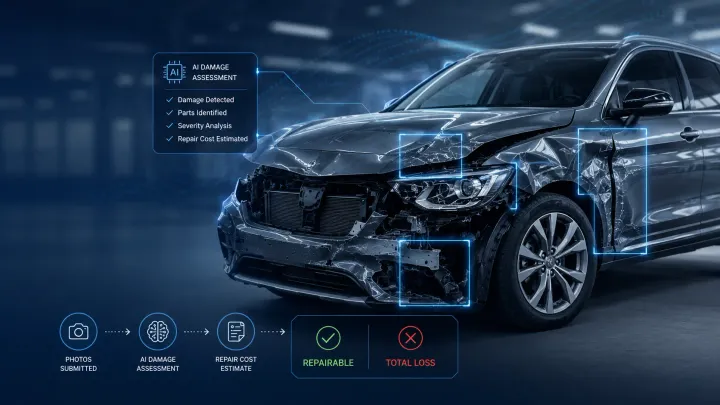
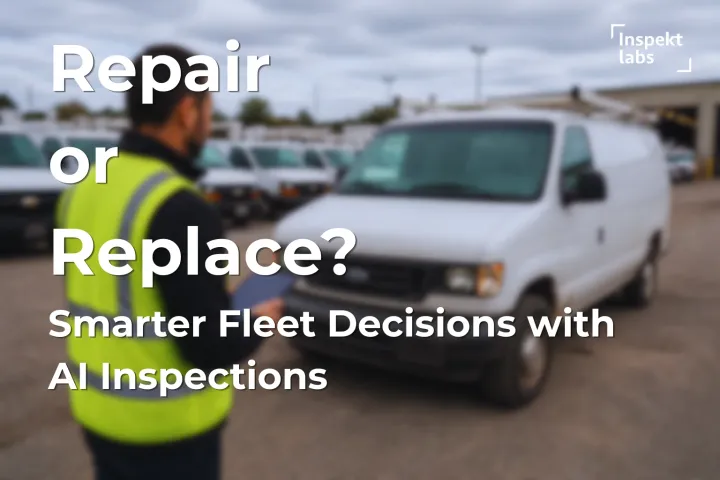
Over-repairing vehicles is a hidden contributor to emissions. Replacing parts unnecessarily increases material usage, manufacturing emissions, and logistics-related carbon costs. AI vehicle inspections enable accurate vehicle damage detection, ensuring repairs are based on actual condition rather than assumptions.
With consistent vehicle damage inspections, insurers can approve only necessary repairs, fleets can optimize maintenance costs, and rental companies can avoid cosmetic overcorrections. Precision in repair decisions not only saves costs but also reduces environmental waste.
Enabling remote, scalable self-inspections
Manual inspections do not scale sustainably. As organizations grow, emissions grow with them. AI vehicle inspections enable remote, high-volume self-inspections through a simple vehicle inspection app.
Using photo-based vehicle inspection, drivers or customers capture images of the vehicle, which are analysed automatically. This approach allows insurance companies, fleet operators, and rental companies to handle thousands of inspections daily without adding any operational overhead or emissions. Sustainability improves as inspection volume scales without physical expansion.
Digital documentation eliminates paperwork
Paper-based inspection reports still persist across the industry. Printing, storing, and transporting documents adds unnecessary environmental impact. AI vehicle inspections digitize the entire inspection lifecycle.
With photo-based vehicle inspection and automated reporting, documentation is generated and stored digitally. Insurance companies benefit from faster claims handling, while fleet and rental operators gain centralized visibility without paper trails. Digital-first processes are not just efficient, they are fundamentally greener.
Better Fleet Health leads to lower emissions
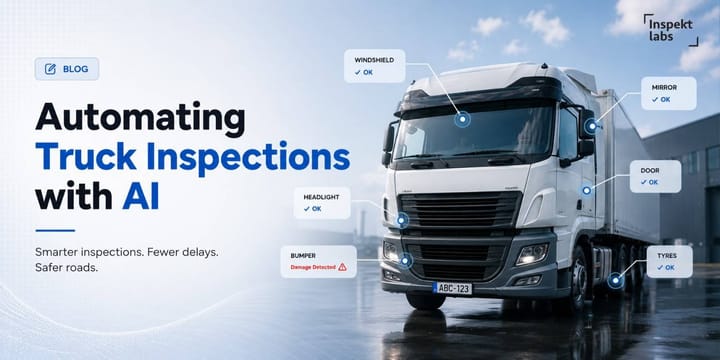
Poor vehicle health leads to inefficient fuel consumption, higher emissions, and more frequent breakdowns. AI vehicle inspections help organizations monitor vehicle conditions consistently through standardized vehicle damage inspections.
By identifying issues early using vehicle damage detection, fleet operators and rental companies can keep vehicles in optimal condition. Healthier vehicles consume less fuel, emit fewer pollutants, and remain in service longer, which helps in directly contributing to sustainability goals.
Building a more sustainable workflow
Sustainability is not achieved through one-off initiatives but through repeatable processes. AI vehicle inspections enable insurance companies, fleets, and rental businesses to embed sustainability into daily operations.
With automated vehicle inspections, inspections become faster, standardized and resource-efficient. Remote execution, digital records, and AI-driven decisions combine to create workflows that reduce waste at every step.
Enabling data-driven sustainability tracking
Reducing emissions requires measurement. AI vehicle inspections generate structured data that helps organizations track inspection frequency, repair decisions, and operational efficiency.
Insurance companies can correlate remote vehicle inspection adoption with reduced claim cycle emissions. Fleet operators can analyze vehicle health trends, while rental companies can monitor damage patterns across locations. This data-driven approach makes sustainability measurable rather than aspirational.
Preventive maintenance avoids major environmental costs
Major breakdowns and accidents often lead to extensive repairs, towing, and vehicle replacement, all of which are carbon-intensive outcomes. AI vehicle inspections supports preventive maintenance by identifying early sings of damage through continuous vehicle damage detection.
Regular vehicle damage inspection ensures small issues are addressed before escalating into larger problems. Preventive maintenance not only improves safety and uptime but also significantly reduces the environmental impact associated with major repairs.
Conclusion
Reducing carbon emissions across insurance, fleet, and vehicle rental operations requires more than intent. It requires the right technology foundation.
Inspektlabs enables this shift by making AI vehicle inspections practical, scalable, and deeply integrated into everyday operations.
Through Inspektlabs’ AI vehicle inspection platform, organizations can replace physical inspections with remote vehicle inspections, automate assessments using automated vehicle inspections, and run high-volume inspections through a single vehicle inspection app. By leveraging photo-based vehicle inspection and accurate vehicle damage detection, Inspektlabs ensures repair decisions are precise, consistent, and environmentally responsible.
Beyond operational efficiency, Inspektlabs helps companies build long-term sustainability by improving vehicle health, reducing unnecessary travel, eliminating paper-based processes, and enabling data-driven tracking of inspection and repair outcomes.
For insurance companies, fleet operators, and vehicle rental companies, Inspektlabs is not just an inspection solution; it is an enabler of smarter workflows that lower emissions, reduce waste, and support measurable carbon reduction at scale.
Frequently Asked Questions
1. How can remote vehicle inspections reduce a company's carbon footprint
Remote vehicle inspections reduce the need to drive vehicles to inspection centers or send inspectors to different locations. With an AI vehicle inspection system, customers, drivers, or field teams can capture vehicle photos from where the vehicle is, reducing unnecessary travel, fuel use, and inspection-related emissions. This is particularly useful for insurers, fleets, and rental companies managing vehicles across multiple locations.
2. Can automated vehicle inspection eliminate paper-based inspection reports?
Yes. Automated vehicle inspection software can generate and store inspection reports digitally from captured photos or videos, removing the need to print, transport, and store paper records. Inspektlabs supports digital inspection workflows that give insurers, fleet operators, and rental companies centralized access to vehicle condition data without relying on paper-based documentation.
3. How can AI vehicle damage detection reduce unnecessary repairs?
AI vehicle damage detection helps companies make repair decisions based on the vehicle's actual visible condition rather than assumptions. By identifying and documenting damage more consistently, insurers, fleet operators, and rental companies can focus repairs on areas that genuinely need attention. This can reduce unnecessary part replacement, material consumption, and the environmental impact associated with avoidable repairs.
4. How can companies measure the carbon impact of remote vehicle inspections?
Companies can track indicators such as the number of physical inspections avoided, inspection-related travel reduced, paper records eliminated, and changes in repair activity. These operational figures can then be mapped to the organization's emissions factors to estimate the associated carbon reduction. AI vehicle inspection software can also provide structured inspection data that helps teams monitor these sustainability metrics over time.
5. How does AI vehicle inspection software automate vehicle condition reporting?
AI vehicle inspection software analyzes photos or videos captured during an inspection, identifies relevant vehicle damage, and converts the findings into a structured digital report. This removes much of the manual work involved in documenting vehicle condition and gives teams a standardized record that can be used for claims, fleet maintenance, rental operations, or other inspection workflows. Inspektlabs combines photo-based capture, AI damage detection, and automated reporting in its vehicle inspection platform.