7 common Auto Insurance frauds and how AI can eliminate them
From misrepresenting damages to tampering with inspection photos, fraudulent claims are one of the biggest challenges in the auto insurance industry. How can AI help tackle these challenges? Let's find out!

Auto insurance fraud costs US insurers an estimated $29 billion every year, according to the National Insurance Crime Bureau. That figure does not include the downstream cost: higher premiums for honest policyholders, longer claims cycles, and the operational burden on teams already stretched thin.
This article is written for claims, fraud, and SIU teams at motor insurers and insurtechs. It covers the 7 most common forms of auto insurance fraud, a realistic example of how each works in practice, and the specific AI detection method that catches it.
The Real Cost of Auto Insurance Fraud
Total insurance fraud losses across all lines reached an estimated $308.6 billion annually in the US, according to the Coalition Against Insurance Fraud (CAIF). Property and casualty insurance accounts for $90 to $122 billion of that figure. Motor insurance sits within this category and is one of the highest-fraud lines by claim volume.
The cost reaches individual households. The FBI estimates that US families pay $400 to $700 more in premiums every year as a direct result of fraud across the insurance system. That premium inflation is not recoverable once it enters the rate model.
The sophistication of fraud is also increasing. According to Shift Technology's 2025 fraud Report, 25 to 30% of claims now involve generative AI-altered images, medical reports, or valuation documents. Traditional manual review is not failing because of skill; it is failing because it cannot scale against AI-generated fraud. As a result, insurers are increasingly adopting AI inspections to detect fraud across the automotive industry before fraudulent claims progress further in the claims lifecycle.
The 7 Most Common Auto Insurance Frauds
Auto insurance fraud ranges from opportunistic misrepresentation to organised, multi-party schemes. The 7 types below cover the patterns that appear most frequently across pre-policy inspections, FNOL submissions, and claims processing.
#1 - Hiding old / prior damages
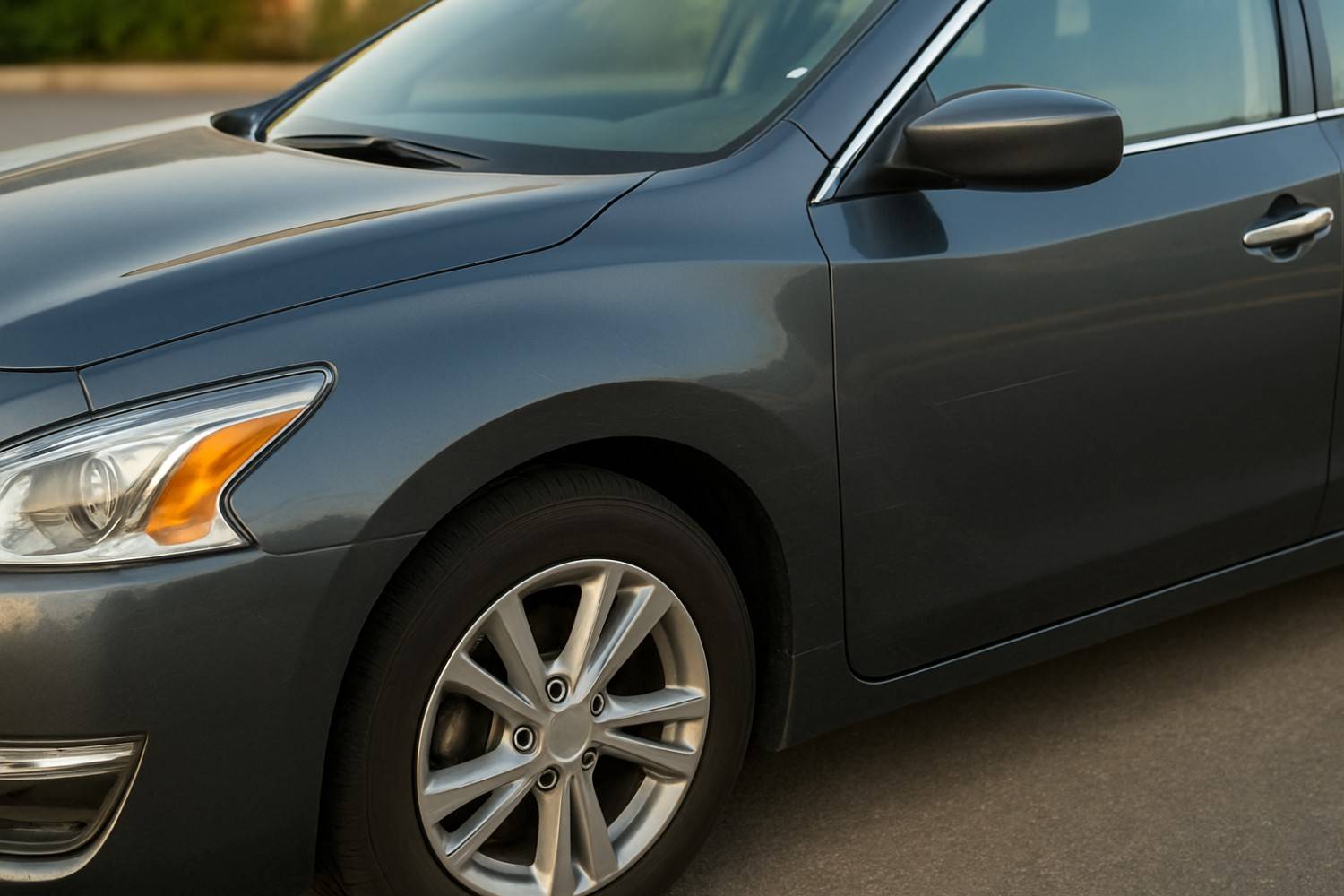
What it is: A policyholder conceals pre-existing damage during the inspection process. This is done by avoiding certain capture angles, parking the vehicle at an angle that hides a damaged panel, or using a physical object to obscure a scratch or dent.
In practice, hiding prior damage is one of the most persistent leakage sources in motor claims because it exploits gaps in inspection completeness rather than detection logic. Motor insurance claim inspection helps establish an accurate record of the vehicle's condition, making it much easier to identify undisclosed pre-existing damage before a claim is processed.
How it works in practice: A driver with a door dent from a prior scrape submits only front and rear photos when photographing the vehicle. The damaged door panel never appears in the submission.
A claim is later filed attributing the dent to a new incident. This type of fraud is difficult to detect retrospectively because the missing evidence never enters the system.
How Inspektlabs tackles this: Tamper-proof guided capture requires photos from all defined angles. Missing or obstructed angles are flagged immediately. The AI also compares the submitted inspection to prior inspection records, identifying damage that was present in an earlier submission and not disclosed.
#2 - Submitting Insufficient Data
What it is: A claimant intentionally submits incomplete inspection photos. Key vehicle areas that would reveal pre-existing damage are skipped.
How it works in practice: Only the front bumper and windshield are photographed during a pre-policy inspection. The rear quarter panels, which have visible damage from a prior accident, are not captured. The omission goes unnoticed in a manual review.
How Inspektlabs tackles this: Inspektlabs' coverage check verifies that all required vehicle areas are captured before the inspection is accepted. If any defined zone is missing from the submission, the system rejects it and issues a new capture link requiring the missing angles. An incomplete submission cannot be treated as a passing inspection.
#3 - Vehicle switching or swapping
What it is: A fraudster submits photos of a different vehicle during an inspection. The substitute vehicle is in better condition than the insured vehicle. This manipulates the pre-policy baseline or inflates a claim.
How it works in practice: A policyholder with a high-mileage, damaged vehicle photographs a similar but undamaged model for the pre-inspection submission. The insured vehicle's actual condition never appears on record. Claims filed later are based on the inflated baseline.
How Inspektlabs tackles this: VIN verification cross-references the vehicle registration captured in the inspection against the insured vehicle on the policy. Make, model, colour, and year are also validated from the imagery. Inconsistencies are flagged for review.
See: What is VIN Fraud and How Does Inspektlabs Help Tackle It?
#4 - Covering damage with stickers

What it is: Temporary coverings such as stickers, vinyl wraps, or adhesive pads are applied over dents, scratches, or cracks during the inspection. Once the inspection is complete, the covering is removed and a claim is filed for the underlying damage.
How it works in practice: A vehicle with a cracked rear bumper has a large brand decal placed over the crack before a pre-policy inspection. The photo submission shows an unmarked bumper. The decal is removed, and a claim is submitted citing impact damage.
How Inspektlabs tackles this: The AI analyses surface texture and colour consistency across the vehicle. Temporary coverings often produce visual inconsistencies: irregular paint sheen, material edges, or abnormal panel reflectivity. Coverage check flags also catch areas that appear incomplete or obscured.
#5 - Claiming for Pre-Policy or Previously Settled Damage
What it is: A claim is submitted for damage that existed before the current policy began, or for damage that was already repaired and settled under a previous claim.
How it works in practice: A vehicle with unrepaired collision damage from a lapsed policy period is brought into a new policy with a break-in inspection. The pre-existing damage is not disclosed during the inspection. It is later submitted as a new claim under the fresh policy.
How Inspektlabs tackles this: Old-versus-new damage differentiation analyses weathering patterns, rust development, and paint oxidation to estimate damage age. The system cross-references submission metadata against prior inspection records and claim history. Damage consistent with the pre-policy period is flagged for the underwriter. Once genuine damage is verified, insurers can move directly into claim estimation software that generates consistent repair estimates based on detected damage, helping accelerate claim decisions.
#6 - Manipulated photos or videos
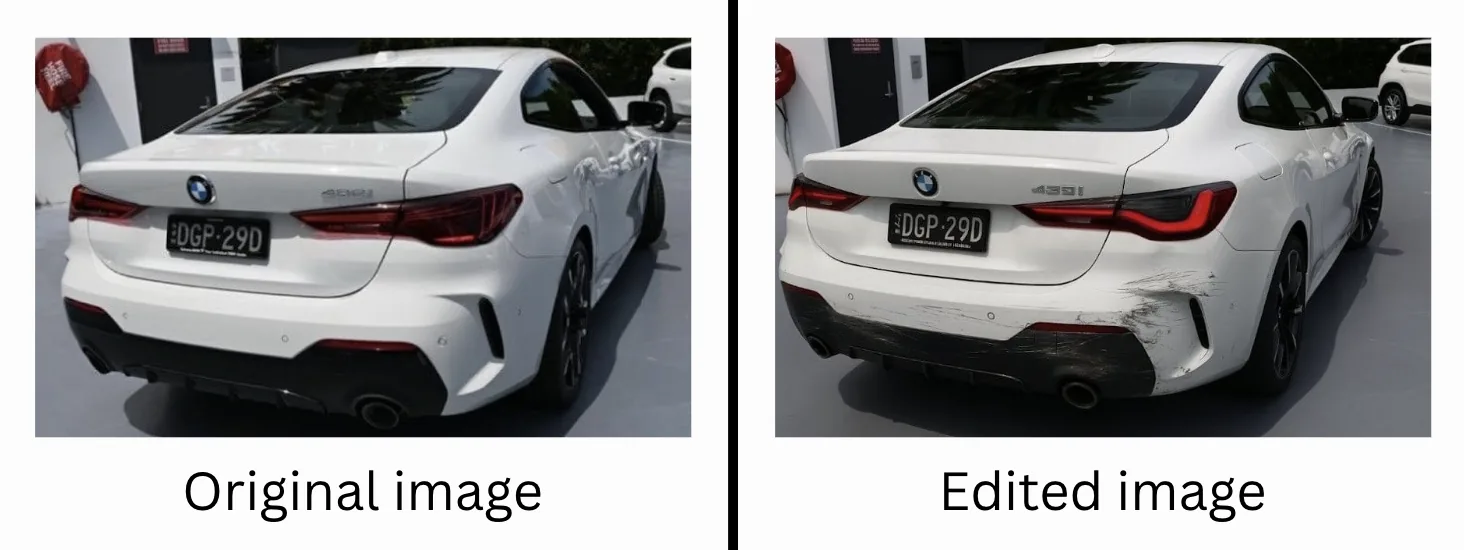
What it is: Edited images or synthetic video are submitted as inspection evidence. Techniques include picture-in-picture substitution, video-in-video overlays, and AI-generated damage imagery. This is vehicle insurance fraud at its most technically sophisticated.
How it works in practice: A prior claim photo showing a heavily damaged vehicle is embedded within a live screen-recorded inspection video. The inspector sees what appears to be a real-time walkround. The underlying footage is a replay of old media. Generative AI tools can now produce convincing damage imagery from scratch, making detection harder for manual reviewers.
Unlike traditional fraud, this involves creating entirely new evidence rather than modifying existing information, which makes detection significantly more complex. This is why fraud detection for vehicle damage assessment has become essential, helping insurers identify manipulated images, hidden damage, and suspicious claim patterns before payouts are approved.
How Inspektlabs tackles this: Inspektlabs detects picture-in-picture and video-in-video fraud by analysing frame consistency, depth of field variation, and screen glare artefacts that appear when a device displays recorded media. Metadata analysis checks creation timestamps, device identifiers, and compression signatures to verify that submitted media is original and unedited.
See: Did OpenAI Make Insurance Fraud Easier?
#7 - Staging accidents or misrepresenting Damage causes
How Inspektlabs tackles this: An accident is fabricated or deliberately caused, or the cause of existing damage is misrepresented. This includes organised staged accident rings where multiple parties collaborate to create a false incident narrative.
How it works in practice: A driver in a slow-moving vehicle deliberately triggers a rear-end collision by braking suddenly in front of a cooperating vehicle. Both drivers file claims. The damage pattern is consistent with a genuine accident. Without cause analysis, the fraud is invisible in the submission.
AI detection method: Cause-of-damage analysis examines the physical characteristics of the damage: impact angle, deformation pattern, paint transfer locations, and the relationship between reported incident type and visible damage. Inconsistencies between the stated cause and the actual damage signature are flagged for SIU review. Tamper-proof live capture also establishes that the submitted media was created at the time of submission, not after a staged event was arranged.
Fraud Type vs AI Detection Matrix
● Primary detection method
○ Supporting method
AI Fraud Detection
Detect fraudulent claims before they become costly payouts
Use AI to identify duplicate claims, manipulated vehicle images, and suspicious damage patterns in real time.
How Inspektlabs Detects Vehicle Insurance Fraud
Inspektlabs' fraud detection capabilities are built into the inspection workflow. They do not run as a separate layer after the inspection is complete. Each capability addresses a specific fraud pattern.
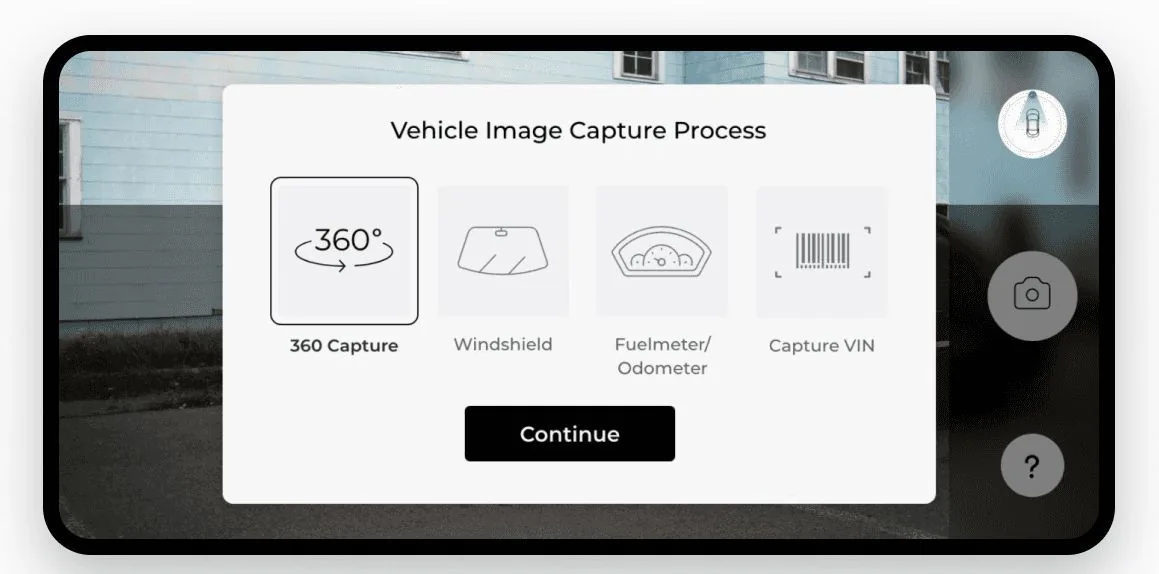
- Tamper-proof data capture - All inspection media is captured in real time through the Inspektlabs app. The system prevents pre-recorded or screencaptured media from being submitted as live footage. The capture is timestamped and tied to a unique inspection session that cannot be replicated.
- Old-versus-new damage differentiation: The AI analyses weathering, rust, and paint oxidation to estimate the age of visible damage. This allows the system to distinguish between damage that predates the current policy and damage that occurred within the coverage period.
- Complete coverage checks - Before the inspection is accepted, the system verifies that all required vehicle zones are present in the submission. Missing or obstructed zones trigger an automatic rejection and a new capture request.
- Cause-of-damage analysis - Damage characteristics are analysed against the reported incident type. When the physical evidence does not match the stated cause, the inconsistency is flagged for review.
- Vehicle Identity verification - Vehicle registration details captured during the inspection are cross-referenced against the insured vehicle on record. Using AI-powered OCR, Inspektlabs automatically extracts VIN and registration information from documents and vehicle images before validating the make, model, year, and colour against policy records.
- Manipulation detection - Picture-in-picture and video-in-video fraud is detected through frame analysis, depth of field inconsistencies, and screen reflection artefacts.
- Metadata analysis - Image and video metadata are checked for creation timestamps, device identifiers, and compression signatures. Reused or edited media from prior claims is flagged through hash comparison against the submission history.
Real-Time Fraud Detection Without Slowing Genuine Claims
The concern most fraud and claims teams raise when evaluating AI detection is speed. Will adding fraud checks slow down legitimate claims?
The short answer is no. The reason is how the system is designed.
AI fraud detection in Inspektlabs runs as part of the inspection process, not after it. Media quality is checked within 15 seconds of submission. Coverage checks ensure that no inspection can proceed with missing vehicle areas, eliminating one of the most common entry points for pre-policy fraud. Damage differentiation, VIN verification, metadata analysis, and manipulation detection all run as part of the same AI processing pass that generates the condition report.
The full process, from media submission to fraud-screened condition report, takes approximately 90 seconds.
For the majority of submissions, this makes no practical difference to claims speed. A genuine claim with clean media, full vehicle coverage, and consistent damage evidence passes straight through. The report is ready in the same 90 seconds.
Only submissions that trigger a fraud signal reach a human reviewer. The system generates a flagged report with the specific anomaly identified: a missing capture zone, a metadata inconsistency, a cause-analysis mismatch, or a manipulation detection result. The reviewer sees exactly what triggered the flag.
This triage approach means SIU teams spend their time on the cases that genuinely need them. Claims that do not trigger any fraud signal move through to settlement without delay.
The result is faster settlement for honest claimants and more targeted review for suspicious ones. These two outcomes are not in tension with each other when the detection runs at intake.
Auto insurance fraud is getting more sophisticated. Generative AI tools are now being used to create convincing fake inspection imagery. Organised staged accident rings continue to operate across multiple markets. The detection methods that worked five years ago are not sufficient today.
AI in insurance fraud detection addresses this by running automated checks at the point of submission. Every inspection is screened. Genuine claims pass through quickly. Suspicious submissions are flagged with specific evidence for the SIU team.
The question is no longer whether fraud detection should be automated, but whether it can keep up with how fraud itself is evolving.
Frequently Asked Questions
- What is auto insurance fraud?
Auto insurance fraud is when someone intentionally provides false or misleading information to get a payout they’re not entitled to. This can include hiding existing damage, staging accidents, submitting edited photos, or using a different vehicle during inspection. - What is the most common type of auto insurance fraud?
Misrepresenting damage is the most common form of Auto Insurance Fraud. This often involves hiding pre-existing damage during inspection or claiming old damage as new. While staged accidents and manipulated images happen less often, they tend to involve higher claim amounts. - How does AI detect insurance fraud?
The AI model analyses inspection images and videos as they are submitted, checking for things like incomplete coverage, mismatched damage patterns, VIN inconsistencies, and signs of manipulation. Most claims are processed automatically, with only suspicious cases flagged for manual review. - What are some examples of AI in fraud detection?
Common examples include verifying the vehicle’s VIN against submitted images, detecting reused or edited photos through metadata, identifying screen-based video fraud, and analysing whether the reported cause of damage matches what’s visible. - How can insurers prevent fraud without slowing down claims?
When fraud checks are built into the inspection process, they run in the background without adding delays. For example, AI can complete a full fraud screening in under a couple of minutes, allowing clean claims to move forward quickly while flagging only the risky ones. - What does AI use to detect insurance fraud?
AI relies on a combination of image and video analysis, metadata checks, damage assessment models, VIN verification, and consistency checks between reported incidents and actual damage. All of this happens automatically during inspection. - Can AI detect fake or manipulated claim photos?
Yes. AI can identify signs of edited or fabricated media by analysing image structure, video frames, and metadata. It can detect things like embedded screens, reused images, and inconsistencies that suggest the visuals don’t match a real incident.