Car Inspection for Insurance: AI-Pre-Inspection Guide
Introduction
[Updated September 2026]
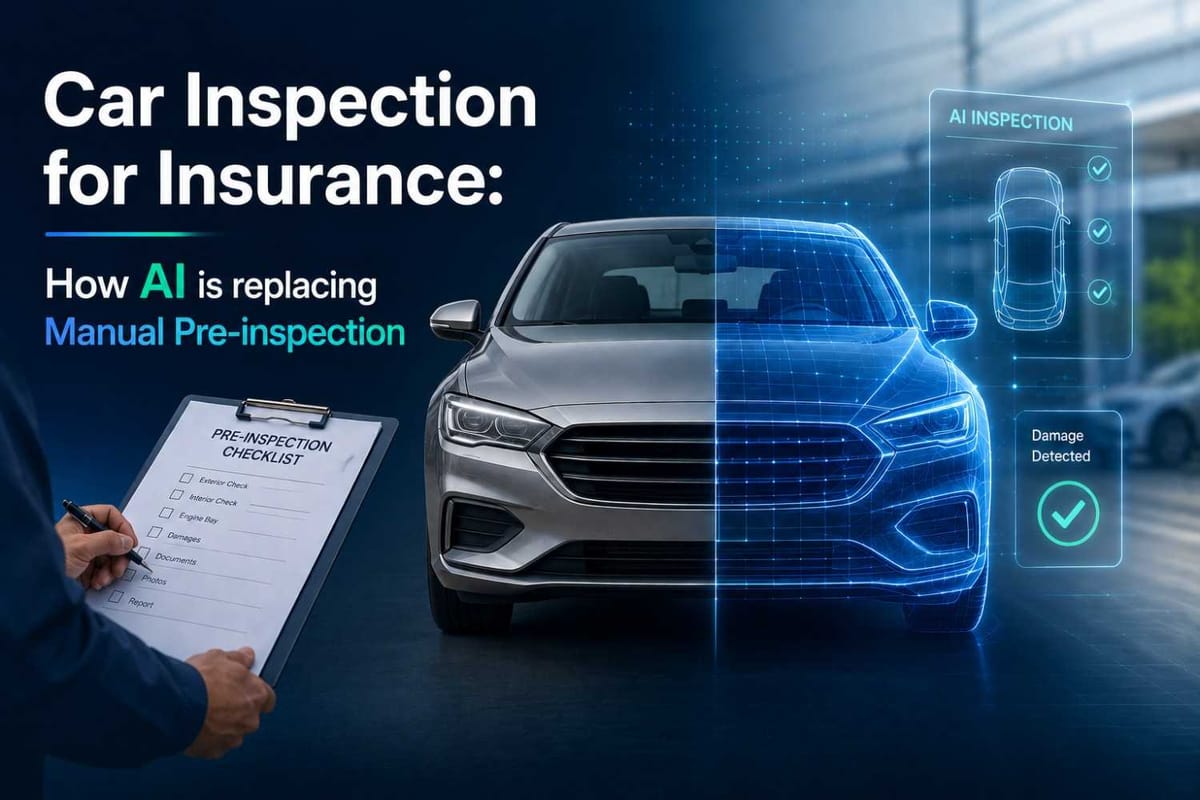
Manual pre-inspections for motor insurance can be slow, expensive, and difficult to scale. Scheduling a field inspector, waiting for availability, coordinating with the customer, and processing inspection reports can take two to five days per vehicle.
A car inspection for insurance helps insurers verify a vehicle's condition before a policy is issued or renewed. With AI-powered inspection, customers can complete the process remotely by capturing photos or videos of their vehicle using a smartphone.
AI-powered pre-insurance inspection can reduce the time involved in this process. The customer can complete the inspection in under five minutes, while AI analyses the submitted images or video and generates a damage assessment report in about 90 seconds.
This article explains what pre-inspection is, when it may be required, what is checked during an insurance inspection, why manual inspection can be difficult to scale, and how AI-powered insurance pre-inspection works.
| Factor | Manual Inspection | AI-Powered Inspection |
|---|---|---|
| End-to-end turnaround | 2–5 days* | Under 5 minutes* |
| Damage report generation | Hours to days | About 90 seconds* |
| Geographic reach | Depends on field network | Remote with a smartphone |
*Actual inspection and report turnaround may vary depending on the inspection workflow, media quality, and insurer requirements.
What is Pre-inspection in Car Insurance?
Car Insurance pre-inspection is the process of documenting a vehicle's condition before an insurer agrees to provide coverage. The goal is simple: ensure the insurer does not accept liability for damage that already exists. It helps the company stay protected against fraud, set accurate premiums, and create a verifiable baseline for future claims.
Not every car insurance policy requires it. Here is when pre-inspection for vehicle insurance is and is not needed.
Break-in insurance is the most common trigger. When a vehicle owner lets their policy lapse for more than 90 days, the insurer has no record of the vehicle's condition during that gap. A fresh pre-inspection is mandatory before a new policy can be issued. This is particularly common in markets across South-East Asia, Latin America, the Middle East, and increasingly in parts of Europe.
For used vehicles, the logic is similar. The insurer has no history with the car and needs a documented baseline before agreeing to cover it.
What Does a Car Inspection for Insurance Check?
A car inspection for insurance is mainly used to establish the vehicle's condition before the insurer takes on the risk. The inspection focuses on visible damage and other vehicle details that can affect underwriting or future claims.
Depending on the insurer and the type of policy, the inspection may cover:
- Vehicle exterior and body panels
- Bumpers, doors, bonnet, roof and fenders
- Windshield, windows, headlights and tail lights
- Wheels and tyres
- Existing dents, scratches, cracks and other visible damage
- License plate and vehicle identification details
- VIN or chassis number, where required
- Odometer reading, where applicable
- Overall vehicle condition
The objective is not to replace the insurer's underwriting decision. It is to give the insurer reliable evidence of the vehicle's condition before coverage begins.
With AI-powered inspection, these checks can be performed remotely from customer-captured photos or video instead of requiring a field inspector to visit the vehicle.
Why is Manual Pre-inspection broken
Manual pre-inspection can work when inspection volumes are low, but it becomes difficult to manage as insurers need to inspect more vehicles across different locations. Customers may need to schedule an appointment, inspectors need to travel to the vehicle, and inspection reports often require additional manual processing.
This can make the process slower for both the insurer and the customer. It can also make it harder to maintain a consistent inspection process across a large network of vehicles.
Here is how manual and AI-powered inspections compare across the metrics that matter most to insurers.
These limitations become more noticeable when insurers need to handle a high volume of vehicle inspections. A digital inspection workflow can move much of the process online, allowing customers to capture vehicle images or video remotely while AI helps validate the inspection and identify visible damage.
The biggest challenge of running a manual pre-inspection process is its scalability. If an insurer wants to process 500 break-in renewals in a week, they need enough inspectors available in the right locations to cover them. That is simply not reliable. Backlogs form, renewal timelines slip, and customers get frustrated.
Manual vehicle pre-inspections are very inconsistent. Two inspectors assessing the same vehicle might report the damage differently, evaluate the damage with different thresholds, or even miss the damage completely. This inconsistency can cause downstream problems for claims processing.
How AI Automates Car Photo Inspection for Insurance
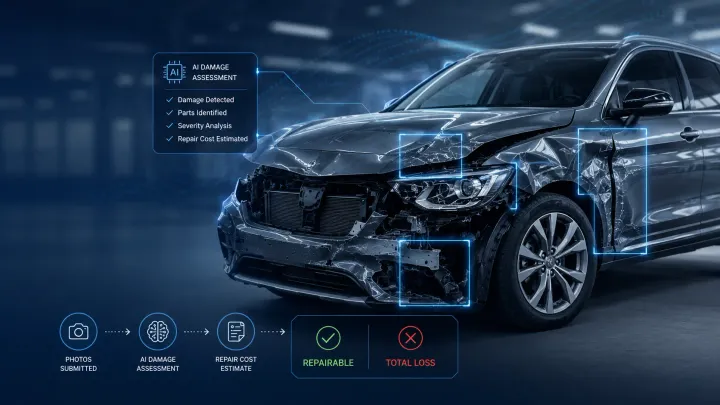
AI-powered insurance inspection is changing how insurers evaluate vehicle condition by replacing manual inspections with AI-driven image analysis. Using guided photo capture and computer vision, insurers can inspect vehicles remotely while improving speed, accuracy, and consistency.
The main difference is that the inspection does not depend on an inspector being physically present at the customer's location. The customer completes the inspection using a smartphone, while AI handles image validation, vehicle damage detection and report generation in the background.
This makes the process easier to scale when insurers need to inspect a large number of vehicles across different locations.
Here is the step-by-step workflow.
- The customer receives an SMS or link for guided photo capture. This is triggered instantly by the insurer's system when a pre-inspection is required. No scheduling needed.
- The customer captures a 360-degree video and/or photos via their smartphone. The capture flow is guided, so the customer is prompted to cover specific angles. This takes 2 to 3 minutes on average.
- Media uploads to the cloud. This typically completes within 30 seconds on a standard mobile connection.
- The Inspektlabs API checks photo and video quality automatically. If any media is blurred, poorly lit, or at an unusable angle, the submission is rejected within 15 seconds, and a new link is issued to the customer for resubmission. No manual review required.
- 5. The AI analyses the images or video and generates a damage assessment report. This is where AI vehicle damage detection comes in. The system analyses the captured media to identify visible damage, classify the affected areas, and generate a structured inspection report.
- The report is shared with the insurer. The assigned underwriter reviews the output and decides whether to approve the policy, adjust the premium, or reject the proposal based on documented damage.
- A digitally signed policy is issued. Once approved, the policy can be issued near-instantly. The entire customer journey, from receiving the link to policy confirmation, can be completed in one sitting.
For the customer, this process is pretty straightforward and requires no travel or appointment. For the insurer, it removes field inspector coordination entirely and produces a timestamped, tamper-proof record at the end.
What Does an AI Insurance Inspection Report Include?
The inspection does not end with detecting damage. Insurers also need the inspection information in a format that can be reviewed and used in their existing workflow.
An AI-generated vehicle inspection report can include:
- Vehicle images or video captured during the inspection
- Detected damage and affected vehicle parts
- Damage location and type
- Vehicle identification information
- Inspection date and time
- Image or video quality validation
- Inspection evidence and supporting media
- A structured summary of the vehicle condition
Having this information in a digital format gives underwriters a consistent record to review before making a policy decision. It can also provide useful evidence later if the condition of the vehicle becomes relevant during a claim.
Automate Car Inspection for Insurance
Replace manual pre-inspections with AI
Replace manual pre-inspections with AI-powered vehicle inspection. Guide customers through photo and video capture and generate detailed damage reports in minutes.
AI Car Inspection vs. Manual Insurance Inspection
The biggest difference between manual and AI-powered inspection is not just speed. It is how the inspection is delivered, processed and scaled.
Key Benefits of AI Pre-Inspection for Insurers
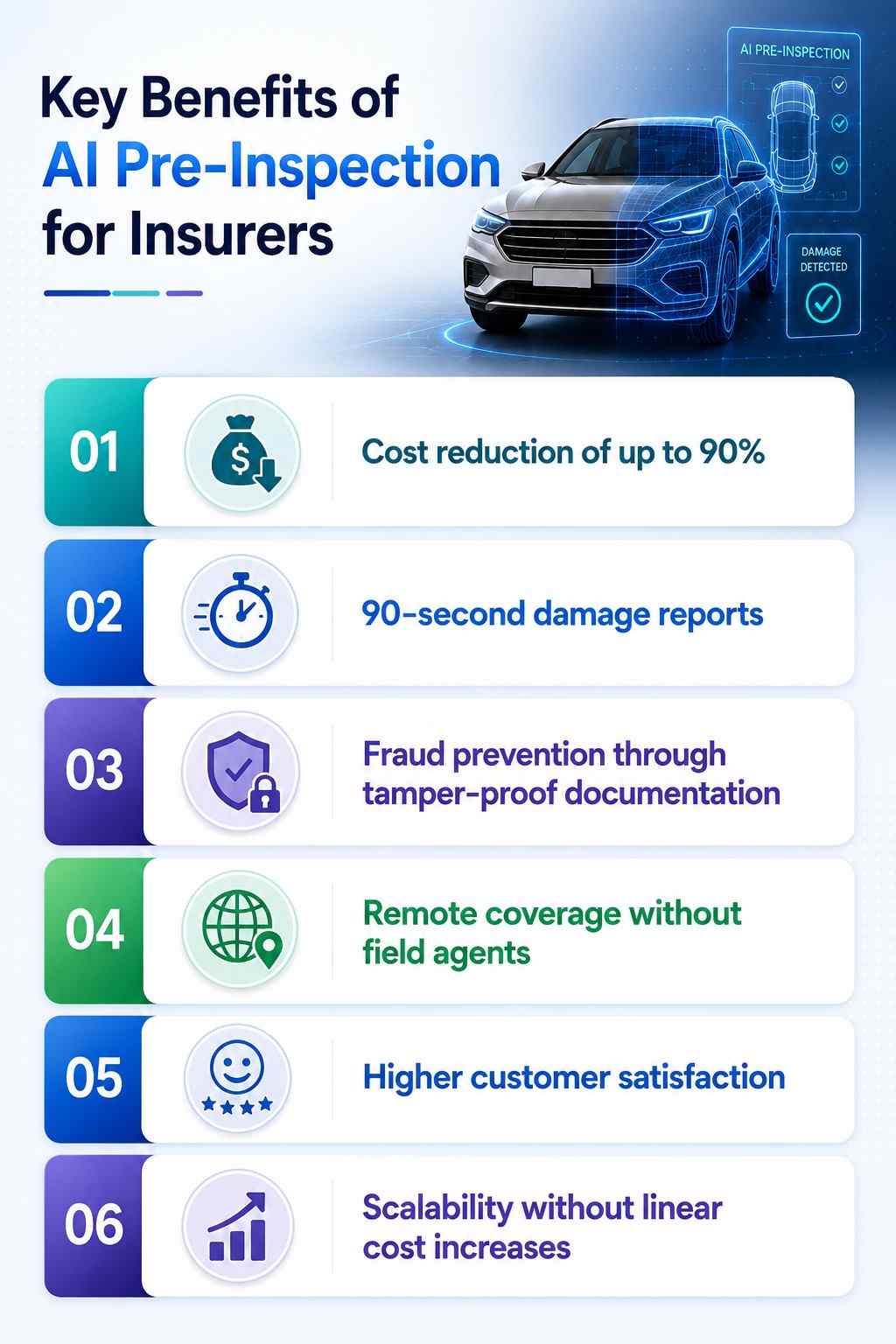
The shift from manual to AI-powered car inspection for insurance can improve the way insurers handle pre-inspection across cost, turnaround time, consistency and scale. The biggest benefits include:
- Cost reduction of up to 90%: Field inspection involves inspector salaries, travel costs, scheduling overhead, and administrative processing. According to Inspektlabs data, AI-powered pre-inspection reduces these costs by up to 90% per inspection.
- 90-second damage reports: Underwriters no longer wait hours or days for inspection findings. The AI-generated report is ready in approximately 90 seconds, which means policy decisions can be made the same day the customer submits their vehicle media.
- Better fraud controls and inspection evidence: AI-verified inspection records provide insurers with a consistent digital trail of the vehicle inspection. Depending on the inspection workflow, this can include captured images or video, timestamps, vehicle information, and other inspection metadata. This gives insurers better evidence to support insurance claim automation when assessing potential fraud or disputes.
- Remote coverage without field agents: A field inspector can only cover a limited geographic area. AI pre-inspection works wherever the customer has a smartphone and a mobile connection, making it practical for insurers operating across rural areas, multiple countries, or regions where inspector availability is inconsistent.
- Higher customer satisfaction: Customers no longer need to schedule time for a physical visit or wait several days for a decision. The entire experience can be completed in under 10 minutes. This faster and more transparent experience also helps insurers build customer trust by reducing delays and giving policyholders greater visibility into the inspection process.
- Scalability without linear cost increases: A manual operation needs more inspectors to handle more volume. An AI-powered system scales without adding headcount. Insurers managing thousands of renewals per month can do so without expanding their field teams.
How AI Car Inspection Helps Insurers Detect Fraud
A physical inspection is not always practical when an insurer needs to verify a large number of vehicles. Remote inspection makes the process easier to scale, but insurers still need to know that the submitted images or videos represent the actual vehicle being insured.
AI-powered inspection can add additional validation checks to the inspection workflow. Depending on the implementation, these checks can include:
- Vehicle identification and verification
- Image and video quality checks
- Detection of manipulated or unusable media
- Guided capture to ensure the required vehicle views are submitted
- Detection of visible pre-existing damage
- Timestamp and inspection metadata
- Validation of required inspection views
These checks help insurers create a more reliable inspection record before a policy is issued or renewed. They can also reduce the amount of manual verification required for routine inspections.
For a broader look at how AI is being used across motor insurance inspections and claims, see our guide to AI in motor insurance inspection.
AI Pre-Inspection Use Cases
1. Break-in insurance renewal
This is one of the most common use cases. When a policy has lapsed and a fresh inspection is required, AI pre-inspection allows insurers to verify the vehicle remotely without routing the customer through a physical appointment.
2. Issuing new policies to high-risk profiles
This is one of the most common use cases. When a policy has lapsed and a fresh inspection is required, AI pre-inspection allows insurers to verify the vehicle remotely without routing the customer through a physical appointment.
3. Used vehicle insurance
When a used vehicle is being insured, the insurer may need a documented record of its existing condition. A remote AI inspection can capture the vehicle's condition before the policy begins and create a digital inspection record.
4. Fleet vehicle onboarding
When a used vehicle is being insured, the insurer may need a documented record of its existing condition. A remote AI inspection can capture the vehicle's condition before the policy begins and create a digital inspection record.
5. Policy reinstatement
When a used vehicle is being insured, the insurer may need a documented record of its existing condition. A remote AI inspection can capture the vehicle's condition before the policy begins and create a digital inspection record.
6. Remote underwriting
When a used vehicle is being insured, the insurer may need a documented record of its existing condition. A remote AI inspection can capture the vehicle's condition before the policy begins and create a digital inspection record.
- Break-in insurance renewal - This is one of the most common use cases. When a policy has lapsed and a fresh inspection is required, AI pre-inspection allows insurers to verify the vehicle remotely without routing the customer through a physical appointment.
- Issuing new policies to high-risk profiles - Customers with limited insurance history, previous claims, or vehicles that require additional verification may need a pre-inspection before coverage is issued. AI inspection allows insurers to handle these cases without adding more field inspection capacity.
- Used vehicle insurance - When a used vehicle is being insured, the insurer may need a documented record of its existing condition. A remote AI inspection can capture the vehicle's condition before the policy begins and create a digital inspection record.
- Fleet vehicle onboarding - When multiple vehicles are added to a fleet policy, inspecting each vehicle manually can take significant time. AI-powered inspection allows fleet vehicles to be inspected remotely and processed through the same standardized workflow.
- Policy reinstatement - When an insurance policy is being reinstated after a period without coverage, an inspection may be required to establish the current condition of the vehicle. Remote inspection can reduce the time required to complete this process.
- Remote underwriting - Insurers operating across multiple cities or regions may not have field inspectors available everywhere. AI inspection allows the vehicle to be assessed remotely while giving the underwriting team a digital inspection record to review.
How Insurers Can Integrate AI Car Inspection Into Their Workflow
AI inspection does not need to operate as a separate system outside the insurer's existing process. It can be connected to the existing policy or underwriting workflow through an API.
A typical workflow looks like this:
Policy request → Inspection request → Customer photo/video capture → AI validation → Damage detection → Inspection report → Underwriting decision → Policy issuance
The inspection request can be triggered when the insurer identifies that a vehicle requires pre-inspection. The customer then receives a link to complete the inspection from their smartphone.
Once the media is submitted, the AI system processes the inspection and returns the relevant inspection information to the insurer. This allows the underwriting team to review the vehicle condition without manually coordinating every inspection.
For insurers, this means the inspection process can become part of the existing digital workflow rather than another manual step that needs to be managed separately.
Inspektlabs provides API-based vehicle inspection technology that can be integrated with existing insurance workflows.
The Future of Car Inspection for Insurance
Car inspection for insurance does not have to depend on field visits and manual reports. With smartphone-based capture and AI-powered image analysis, insurers can collect vehicle information remotely, identify visible damage and generate inspection reports without adding the same level of operational overhead.
For insurers handling high inspection volumes, the bigger opportunity is not just faster inspections. It is creating a consistent digital process that can fit into underwriting and policy workflows.
As more insurance processes move online, AI-powered vehicle inspection can help make pre-inspection faster, easier to scale and more convenient for customers.
Frequently Asked Questions
- What is pre-inspection in motor insurance?
Pre-inspection documents a vehicle's visible condition before a policy is issued or renewed. It is mandatory for break-in renewals, high-risk profiles, and used cars being insured for the first time. - How does AI automate car inspection for insurance?
Instead of booking a field inspector, the customer simply captures photos or videos on their smartphone, uploads them, and the AI pre-inspection system analyses the media and generates a damage report in about 90 seconds. No travel, no waiting, no paperwork. - What is break-in insurance and why does it need pre-inspection? Break-in insurance applies when a motor policy has lapsed for more than 90 days. A fresh car inspection for insurance is mandatory before renewal to establish a clean baseline and prevent claims for pre-existing damage.
- How long does an AI-based pre-insurance inspection take?
AI pre-inspection takes under 5 minutes in total. Photo capture is 2 to 3 minutes, upload is about 30 seconds, and the damage report comes back in roughly 90 seconds. Compare that to the 2 to 5 days a manual car inspection for insurance typically takes. - How accurate are AI car inspections when compared to manual inspections?
AI-powered inspections apply the same damage detection criteria to every submission, removing variability based on inspector experience or bias. This consistency also reduces disputes at the claims stage. - What does a car inspection for insurance check?
A car inspection for insurance checks the visible condition of the vehicle before coverage is issued or renewed. Depending on the insurer and inspection requirements, this may include body panels, bumpers, lights, windows, tyres, existing damage, vehicle identification details and other relevant vehicle information. - Can a car inspection for insurance be completed remotely?
Yes. With AI-powered vehicle inspection, customers can capture photos or video of their vehicle using a smartphone. Guided capture helps collect the required views, while AI can validate the submitted media and analyse visible vehicle damage. - Can AI detect pre-existing vehicle damage?
AI-powered vehicle inspection can identify and classify visible damage in submitted vehicle images or video. This helps insurers document the vehicle's condition before a policy is issued or renewed and provides a reference point for future claims.
For a full breakdown of what happens during a motor insurance claim inspection, see our motor insurance claim inspection guide.